there is a history of American temperance literature that Carousel slots
into nicely. Temperance literature, very briefly, aimed to convert the
drunkard from his destructive ways and onto a path of righteousness and
bourgeois productivity. In many cases this was through tales of the
(female) children of these intemperate men taking the brunt of their
violence and, through the power of their innocent acceptance in the face
of this onslaught, their weathering of the storm, allowing these men
the chance of redemption. It would seem that a broken and powerless man
is in need of an unflinching and unarguing object for his patriarchal
control in order to be rebuilt as a man of action. The drunk is drunk
because he has been denied, or has forsaken, the mantle of authority
that a man must wear: alcohol is a way to avoid responsibility and for
the family patriarch the first responsibility is ownership of the women
(and the as-yet ungendered boys) of his household./.../
When, in Bioshock: Infinite, then broken drunk Booker DeWitt batters down the
doors of a castle that he himself built in another life to rescue his
own daughter, trapped there in an asexual stasis it is not the chaos of
imagery and symbolism that it at first seems, but instead a direct
descendent of the form of rehabilitation pioneered by temperance
literature.
/.../
Perhaps unsurprisingly then the piece of
Infinite fan media that most makes sense to me is Zone’s Biocock:
Intimate, which collapses the erotic tension inherent in the game and as
Maddy Myers says ‘comes … a lot closer to offering me the version of
Elizabeth that I wanted to see than BioShock did,’ one who ‘speaks,
moans and calls the sexual shots.’
/.../
In Zone’s game, the
protagonist, this time a disembodied cock rather than a disembodied gun,
as if there is a real difference, is still Booker, making explicit the
incestuous undertones of the source game while neither remarking on them
or judging them.
/.../
Ken Levine, Bioshock’s lead creator, keeps telling
people to stop sexualising Elizabeth because he views her as a daughter.
But I cannot for the life of me imagine why he thought a young woman
would neither develop or be the subject of a sexual gaze, especially
when, as I keep saying, the story that is told in Infinite is the story
of her sexual awakening and her emergence from the cloying constraints
of a father who wants to own her and use her as a replacement for his
wife, with all of the sexual labour that that implies.
/.../
It is
a fairly common mechanism of patriarchy that violence against women is
framed as being bad, by and for the understanding of men, on the premise
that ‘you wouldn’t want this to happen to your daughter,’ that a victim
is ‘somebody’s daughter.’ Fundamentally what this says is that men can
apparently only view women as an object in relation to a man, not as a
person in their own right. The non-daughter is an acceptable site for
your sexual fantasies because she is not owned and spoken for. Female
sexual awakening is therefore posited as a process by which a man
separates the bond between father and daughter, destroying the tower and
building a new one to encase her and protect her from the sexual
fantasies of other men.
/.../
as an industry and a society we will
continue to seek our redemption in the arms of those we have wronged,
whose job it is, like the little sisters of the original Bioshock, to be
used to fuel our monstrous rages and to accept our caresses and desires
when we break down and wish for forgiveness. We will continue to expect
these women to save us with their love.
[I
love how pieces like these can put something in a larger context and
enrich my understanding of something which didn't make as much sense
before. It's interesting how I even come to appreciate Bioshock Infinite
more in some twisted way, even if it's flawed in its execution and in
using this idea of temperance without my having seen them putting it in
brackets or providing self-reflexivity.]
§
we see Fragile Dreams trying to reconcile modern Japanese life with traditional Japanese thought. However, looking at the game on a
character level complicates the aesthetic. These ways of seeing the
world are not natural, as Seto (the game’s protagonist) must spend the
entire game learning to appreciate the beauty that arises from a
fleeting reality.
/.../
For Japanese aesthetes, the most beautiful
arts would blend into the greater world around them. Anything that
announced its presence was considered simple, boisterous, and to be
avoided.
/.../
in terms of mono no aware, the best way to bring out something’s beauty is to remind us of its inevitable change or passing.
/.../
as
long as technology does not supplant the feeling of change and being in
nature, it’s capable of functioning within Japanese aesthetic theory.
/.../
Over
the course of the game, Seto finds various broken items amid the
wreckage. When he takes those items to a bonfire, he finds out what they
are, and hears a short story regarding the item’s last owner. There’s a
consistent message running through these stories: one of unfulfilled
desire. The protagonists of these stories regret making choices they can
never fix, or they feel scared after having something valuable taken
from them. They realize that their lives are short, and Seto sees that
their worries outlasted them.
/.../
The game relays most of these
narratives through some object the owner confided in. They intended to
relieve their pain at least a little bit, but all we see is their
emotional pain; we rarely see any kind of resolution. Therefore, the
objects fail to serve their intended purpose of consoling their owners.
The cell phone’s story displays this quite poignantly: while her intent
is for the world to remember her, the tragic irony of her situation is
that she leaves us nothing by which we can identify her. We don’t know
her name or any details about her life, and it’s unclear if Seto can
even access those details. All her story illustrates is how insufficient
her possessions are for satisfying her wants, even if she can never
know that.
§
If Fragile Dreams uses its environments to celebrate Japanese aesthetics, then it uses Seto, the protagonist, to complicate them.
/.../
he’s so pre-occupied on his loss that he’s unable to draw a connection
between the impermanence of life and its being valued in the first
place. Any mentions of impermanence at this point in the story reveal Seto’s
negative thoughts on the matter. For example, he opens the game with the
words “At the end of a summer that was all too short” (tri-Crescendo).
On one level, these words indicate his wishes that the summer had
lasted longer. Yet on another, they connote loss. This is a consistent
theme throughout Seto’s opening narration, implying that he can only
perceive change and passing on painful terms. We might also draw
connections between the youthful connotations of summer, Seto’s
adolescence, and the death of his caretaker.
/.../
if we interpret the old man’s death as an opportunity for Seto to
appreciate life’s transience, then we must also interpret the
possibility of survivors as an opportunity for Seto to deny that very
same transience.
/.../
Seto’s denial is best illustrated through his interactions with Ren, a
silver-haired girl who appears to Seto very early in the narrative. She
runs from him the second the two meet, and he only gets brief glimpses
of her throughout the story. He follows her by the drawings she leaves
in her wake, and when the two finally cross paths, it’s only for a short
period of time. While the story uses these facts to code her character
with impermanence and uncertainty, this isn’t the meaning that Seto
reads from her. Upon first meeting her, he remarks, “On my journey
through the world, all the people I thought I saw slipped away like they
were just a mirage. But that girl… her cheek was warm to the touch” (tri-Crescendo).
So for him, Ren represents life and stability. She is the anchor
against which he can verify his own experiences as real. Yet the irony
is that is in worrying about whether his experiences are real, he fails
to appreciate them for what they are.
/.../
the time he spends with other people shows him how it’s possible to
appreciate things for their temporary nature. The first person to show
him this is PF, a robotic assistant that Seto attaches to his back. The
two grow close to each other as they explore the underground mall in
search of Ren. However, their journey together is very brief: at the end
of the day, PF’s battery drains, effectively ending her life.
/.../
Where the old man struggled to share his most intimate with regrets
with Seto after knowing him for fifteen years, PF has no problems
telling him about how much she loved talking with him, despite only
knowing him for a day.
/.../
The two themes that emerge from Seto’s time with PF — death and its relation to mono no aware —
carry throughout his encounters with other people. Chiyo demonstrates
this the best by bringing the two into focus for him. When the two
characters meet, Seto initially sees her as the ghost of a bratty little
girl who demands that he does the impossible. But as he continues to
fulfill her requests, he eventually learns the reality of the situation:
she is an old woman on her death bed. Chiyo leaves Seto with these final remarks:
"The day will come when your journey will
end as well. Your greatest adventure will be over and you will make
your way home. However, your journey will not be complete. The days will
still go on for you. One after another they will pass, until you’ve had
enough of the monotony. No new discoveries will await you. You’ll watch
the sun rise and set. That’s all your days will have to offer. That’s
the moment when you’ll realize the truth. The sunbeams, the wind rolling
over the tall grass, the idle chit-chat with friends…These were the
gems of your life. Then your heart will be carried off by the gentle,
caressing breeze and it will sparkle like a jewel, fade, and grow cold."
/.../
her own life suggests that mono no aware could be a psychological
state of being rather than something inherent in life’s experiences.
She was able to view the same natural phenomenon (sunrise/sunset) at
least twice in her life but have greatly divergent reactions to them at
different times. In her youth, she viewed the sun’s movement as a dull
monotony. It is only on her deathbed that she can finally appreciate it
as a liberating event. That realization didn’t come to her in a moment;
she had to cultivate it over an entire lifetime of thought on the
matter. In relaying her message to Seto, Chiyo helps him through the
process of appreciating life’s transitory nature, and hopes to shorten
the time necessary to learn it.
§
Silent Hill 2’s architecture, along with its iconic blend of fog and darkness, is its main antagonist.
/.../
Oddly
enough, this unnerving dysfunction stems from the game’s sense of
order. It has an obsession with the well-ordered spaces of institutions,
taking the player from an apartment block, to a hospital, to a prison,
and finally a hotel. The symmetrical ground plans for these locations,
found on the game’s various maps, seems to have been pulled wholesale
from life, rather than created for use in a videogame. In order to
become functional spaces in a game where exploration is key, these maps
have then been hacked into, with entrances blocked off and walls smashed
through. The divisions, functions and even internal logic of the game’s
architecture is subverted, room by room. The game constantly forces the
player to turn back on herself at a dead end, to check again and again
the map, and try to connect its straight and true lines with the
decaying masonry around them.
/.../
The descents of Silent
Hill 2 are many. It is no coincidence that the game’s protagonist, James
Sunderland, begins his journey at a rest stop high above the town, and
must descend into it. This marks a preoccupation with downward gestures
that recurs throughout the game, from elevator rides, to climbing into
your own grave.
/.../
In the final third of Silent Hill 2
the player arrives at the top of a staircase. Its not the first
staircase in the game, or even the last, but it is the beginning of
something. Projecting down into darkness, it marks the start of the
game’s most exhausting descent.
/.../
This is where Silent
Hill 2’s architecture reveals itself as a psychological construct. Up
above, in the town, ordered spaces stand in a struggle with the onset of
decay, but here, as you tread ever deeper, the subconscious takes over.
§
the beauty of P.T. is not in its basic looping structure, but they way in which it plays and experiments within that structure.
/.../
In semantic terms, the game’s corner is analogous to the classic ghost-story phrase “and then.”
It is the architectural equivalent of the shock reveal, articulated
through a 90-degree turn. It’s an ancient story-telling trick, holding
information back until the last possible second, but P.T.’s twist on it
is to do so without speaking a word, performing its repeated reveals
through the clever manipulation of space. Sometimes these reveals are
red-herrings, showing you the corridor you expect to see, but in the
world of P.T. even this is a cause for concern—if the corridor hasn’t
changed, then something else has. It’s worth nothing that almost
everything that happens, from bloody fridges to generic horror graffiti,
happens on the other side of that corner. After every repetition the
first task is clear—walk. This is the way the storyteller has you in her
grip. “She entered the corridor,” P.T.’s storyteller says, “walking
cautiously, unsure of what might be waiting for her. As she reached the
familiar corner she paused … and then …”
/.../
The clock,
the phone and the radio, all three sources of information, are carefully
spread, each given its own alcove. The front door is the only door that
never opens, an escape to an outside world hinted at but never allowed.
At the end of the corridor lies a short set of steps, meaning that for
each loop you must descend a little further down. This descent is
carefully offset by the balcony that hides in the darkness above the
entryway, imbuing in the player the distinct feeling of being watched.
These precise architectural features, twisted through an elegant play of
light and shadow, are laid out with precise intelligence.
/.../
Agency
is non-existent—instead, choreography reigns supreme. P.T.’s scares may
follow well-worn horror iconography, but they don’t require it to
function. Instead they rely on the corner and the corridor, the room and
doorway, the bright and the dark. This—the idea that horror exists as
little more than a series of spatial arrangements, presences and
absences—is truly P.T.’s greatest trick.
§
Eventually, every genre, every media, has its Ulysses. I don’t know if Kentucky Route Zero is Ulysses. It’s certainly allusive: a structurally
complex, confusing, the brilliant and beautiful episodic point and click
game by Cardboard Computer in which a host of characters embark on a
seemingly meaningless and mythical journey through the finance and
poverty ravaged landscapes of rural Kentucky. Regardless, writing about
KRZ is not “easy”. Partly because of its episodic nature, and partly — I
think — because of its dense and almost Beckettian allusiveness, its
semantic density, KRZ seems to escape ready comprehension and
understanding. Its mechanics (the word we often descend on to describe a
technical process) are both simple (literally, “point and click”) and
alarmingly diffuse (navigating, by symbols, the Zero itself). Meanwhile,
its ‘story’ – the fabula itself – is slippery, and the formal framework
around which it is arranged is complex. It’s perhaps the hardest ‘text’
– not simply ‘game’, but text, product, artefact (see? Even finding the
right category word is tough) – that I’ve ever tried to write about.
/.../
Maybe
we’re not properly equipped to write long-form about video games —
especially those games which excel in their own obscurity and
strangeness — and are not used to it, or are standing in the primordial
sludge of it.
/.../
For KRZ, and games like it, it might be best to think with the rhizome in mind. You build your theory as you go.
§
[SOMA]
These days, when we talk about being
human, we’re more preoccupied with defining humanity in opposition to
machines and advanced AIs. We want to reassure ourselves that we have
something more than an uncanny android who looks like us, acts like us,
speaks like us, and is better than us at almost everything. It’s as if
we know our feeling of superiority is dwindling. Taking the Aristotelian
definition to its extremes, perhaps we could say that modern-day
machines, as purely rational creations, are even more human than us.
/.../
In trying to preserve the core of what
it means to be human, it’s easy to forget that this core immediately
changed when coming into contact precisely with what we’re defining
humanity against. The very existence of machines has already changed our
concept of what it means to be human.
/.../attachment to the body as an
imprescindible part of one’s identity, both in a positive and in a
negative way, is one manifestation of that excess that is unique to the
human. We also have have
Catherine, the exception who accompanies the player for the best part of
the game but who lives in a chip attached to Simon’s Omnitool. I don’t
think the game explicitly says why she doesn’t go mad like everyone else
who suffered a similar fate, but I believe the answer may be found in
her strong sense of purpose. /.../
Catherine is the most liminal figure
in this world in which every barrier is being broken. A human mind in
purely mechanical hardware, she is driven by a very specific purpose,
and, like a machine, she evaluates the world purely in terms of utility
towards that purpose. But what she wants to achieve is precisely the
recovery of a space in which to be human. As such, she is driven by a
concept of what human life means as opposed to the mere survival of
biological functions, a concept that the WAU never understood.
/.../
The machine ends when there is no clear objective left to achieve.
The human, as we have seen, begins with the excess: the reality of being
left behind when the objective has been achieved and disappears. It’s
the reality of being alive when there is nothing left to do, a reality
in which the body remains in its irreducible, useless materiality.
§
Sunday, January 17, 2016

Saturday, January 16, 2016
Crit Links 16/1
Things of Beauty: Super Smash Bros. as Spectator Sport
§
Into the Black: On Videogame Exploration
§
Near-Impossible Super Mario World Glitch Done For First Time on SNES
§
Game Writing Pitfalls - Lost Opportunities in Games - Extra Credits
§
Ingenious Solutions in Video Game Design: A Long-form Analysis
§
WIRED by Design: A Game Designer Explains the Counterintuitive Secret to Fun
§
Classic Game Postmortem: Loom
§
Get Anticipated - The Final Bosman
§
What if you could talk to the monsters? The Wuss Mode: Monsters Won’t Attack mod for SOMA [official site] doesn’t quite allow you to hold conversations with the denizens of Frictional’s latest creation but it does prevent them from chasing you around the place until you die. I’m excited to try this because it might just improve the game significantly, simply by focusing on the fact that fear does not need to be followed by violence and death.
§
“One of the weirdest / saddest design exp I had: [Bioshock 2] playtesters carefully loot every container for hours, then report hating every moment.”
- Zak McClendon, Lead Designer on Bioshock 2
/.../
I was a moth to the dull flame of the hidden packages of GTA III (Rockstar, 2001), pieces of virtual tat that simply add one to a meaningless counter. I continued to burn rubber for hour after hour until I had found every last package. They’re just one example of the now ubiquitous collectible. Today I’d like to introduce the collective noun for the collectible: a fucking plague.
/.../
thank God for those first-person secret box games dubbed “walking simulators”. At least there aren’t any items to hunt, right? We don’t need rewards for our activities! Oh reallllly?
/.../
Will O’Neill, who wrote Actual Sunlight (2014) and provided words for Planet of the Eyes (Cococucumber, 2015), tweeted that he walked an entire football pitch in Everybody’s Gone To The Rapture (The Chinese Room, 2015) hoping to trigger a scripted response but there was nothing. He felt the game was forcing him to do tedious things for fear of missing out. O’Neill is not the only one to feel like his time is being squandered by these games. But when players who are into walking simulators complain they have no reward other than walking – you know something has gone wrong. It’s our old friend the overjustification effect: once you wrap an incentive around something people enjoy doing, it performs a weird kind of alchemy that transmutes the fun into drudgery, into work.
/.../
When I played Fuel, it was easy to concentrate on the driving and forget about those paltry liveries and vista points because they were too sparse, but the scrum of missions and sidequests and collectibles had come to define GTA more than its cityscapes. I had hated GTA: San Andreas, with prior GTA experience convincing me to conquer everything – but San Andreas was overwhelming and I was left dejected.
Yet all I needed to do was forget about the objectives and collectibles.
All I needed to do was get in a car and drive.
§
“Don’t hate the player, hate the game,” says the pick-up artist. “I’ve just got more game than you,” says your roommate who wears too much cologne. Comparisons between dating and gaming are commonplace in our web-obsessed culture, and thanks to a recent profile on Tinder from Fast Company, it turns out this connection is less superficial than you might think.
/.../
According to Tinder CEO Jonathan Badeen, Tinder uses a variation of ELO scoring to determine how you rank among the site’s userbase, and therefore, which profiles to suggest to you and whose queues your profile shows up in. Invented by physics professor Arpad Elo to determine rankings among chess players, ELO assigns ranks by judging players’ presumed skill levels against each other.
/.../
The result is a system where your ranking is more determined by how you compare to other people rather than personal stats. The system has since been adapted for use in football, baseball, and even videogames such as League of Legends and Warcraft. So when translated to Tinder, the algorithm can be understood on a basic level as one where who you match with determines who the app shows to you. Get matched with those with a high ELO, and the site will start populating your queue with the people Tinder as a whole finds more desirable. Get matched with those sporting a lower ELO, and the site will only show you people who don’t get as many matches from high-ranking users. Your ELO is determined by the supposed desirability of the people who think you’re worth dating.
/.../
So if you want Tinder to think you’re cool, you need to match up with a greater number of popular users and fewer unpopular users.
/.../
Essentially, the key isn’t how many people find you attractive, but which people think you’re worth dating.
/.../
What if higher-ELO people match with you, but you’re actually interested in the type of people who normally have lower-ELO ranks? Just because other high-cheekboned and full-lipped ELO titans aren’t interested in them doesn’t mean you wouldn’t be. You might even be driven away by traits that Tinder as a whole finds more attractive. But because the high-ELO community has deemed you worthy, your queue will be filled with them while the type of people you’re actually interested in remain out of reach.
/.../
Dating is often framed as a competition, where one has to strive to attract as many people as possible. In this context, it might make sense to use a system born out of competition to rank which “leagues” people fall into. But the end goal of dating is one of the biggest cooperative endeavors people can take on together. Which raises the question: Is a system born out of a war game like Chess really the most appropriate way to judge compatibility?
§
What gives Homesickened its gut punch is that, ultimately, it is a story about trying to go home, but how, for many of us, we can never really do that again. It’s a story about loneliness, isolation and the consequences of putting more value in things than in the people around us. The ironically wistful reproduction of CGA DOS conventions is, after all, the earnestly resigned sigh too heavy for the software designed to render it.
§
Blow says he designs puzzles to be "first and foremost a representation of an idea, non-verbally." Rather than just being a tricky thing for a player to solve, he wants each puzzle to say something to the player. He does this by actually writing out a sentence for each puzzle.
/.../
Here's where Blow reveals The Witness' greatest trick: It's not only that he's not scared of players getting stuck, but that getting stuck is actually a key part of the process. It's a requirement to the feeling he wants the game to create. "I try to make puzzles in The Witness as simple as they can be," Blow says. "You just don't get it. It's not only that you don't get it, but you don't feel like there's anything to tell you how to get it. It's as much of a brick wall as possible, with no red herrings or anything. So eventually, when you manage to stick your head through that brick wall and see what's past it, it's the most magical.
§
Critical Switch: Winter 2015
Zolani Stewart - Bernband 14:50
Austin Howe - Party Size in JRPGs 07:36
Austin Howe - Dead Sun 10:24
Zolani Stewart - F-Zero and The Language of Space 10:50
Austin Howe - Rest In Pain 15:19
Zolani Stewart - Petrichor 07:57
Austin Howe - BBSD, Ludocentrism, Abstract Themes 06:09
Zolani Stewart - An Intro to Minimalism 15:10
Austin Howe - Republican Dad Mechanics 07:37
Zolani Stewart - Mirror's Edge: The Landscape of Sound 09:15
Devon Carter (Guest) - JRPGs and Simplicity 11:20
§
Critical Switch: Summer 2015
Austin C. Howe - Shovel Knight and Interrogation 07:27
Zolani Stewart - Expanding Interactivity 13:30
Austin C. Howe - FFVII and Jazz Standards 09:40
Austin Howe - Intro to Game Design and Drama 09:15
Crit Switch Podcast! 26:55
Heather Alexandra - Procedural Generation in Game Design 08:25
Zolani Stewart - Menus and UI 04:05
Game Design and Drama: The Resistance Curve 09:06
§
At the end of disc one, Squall and Friends face Edea on a parade float in Deling City. After the fight, when Edea seems defeated, she conjures an enormous ice shard and propels it through Squall’s chest. Squall stumbles back and falls off the platform. He sees Rinoa above, reaching to him as he falls. Squall closes his eyes and dies. The entire remaining game time, from the beginning of disc two to the second half of the ending movie, is a dream.
§
Leigh suggested that it might be fun for us to do a letter series as I played, combining her nuanced understanding with my fresh eyes to explore just what it is that makes FFVII the game it is. I agreed, and we started to write.
§
What we see in gaming right now is not colonialism, but evolution: the changes that need to take place for the art form to survive and thrive. Rather than imagining games as a community of chosen people whose integrity must be protected, everyone must take a broader view of the form and the multitudes it already contains.
§
Those who dwell in the Friend Zone are not imprisoned by the object of their desire; they are imprisoned by desire itself, always entreating them to chase their own tail. The walls they build and occupy play host to a thousand doppelgangers, each wearing the mask of one person. They think they hate the person, but they hate only themselves. They think this person imprisoned them, but they must have imprisoned themselves.
/.../
Reading as I am in the year 2015, I must describe K’s behaviour as rapey; I must say he’d fit right in amongst the denizens of The Friend Zone, nestled snugly between the Nice Guys™ and the Creepers. It’s possible that his actions appeared dashing in the eyes of the book’s 1915 audience (as well as the eyes of the Internet Man). Regardless, the plot confirms for us that they were unwelcome and inappropriate, since Miss Burstner vanishes into the woodwork following the evening’s events.
/.../
My work on Friend Zone prompted me to read it as an elegy for the Internet Man, delivered 100 years before the fact. Like the Internet Man, K has exploited his station: lorded it above anyone he could, believing this to be his birthright and purpose. Like the Internet Man, K is too busy chasing tail to comprehend the shape of his crimes. His verdict is as much about big inscrutable forces as it is about a peculiar personal failing; it plays out neither with K’s complete consent nor fully against his will.
§
Ethan Carter's final cutscene is a story unlock, whereas Verde Station’s last scene is a total shocker that does not, in itself, answer the big questions. HOWEVER. Both games refute the lazy pejorative “walking simulator” albeit in different ways.
/.../
an interesting distinction between Ethan Carter and Verde Station. The latter is much more authoritarian about gating progress, yet the former more inviting to the explorer-player, save for the endgame. Which is the better game? The question is how you like your mysteries spun. If a player figures out the story in the first few minutes, then the player is consigned to watching pieces move into assigned positions - and this is one of the reasons why Gone Home gates progress through the story.
/.../
I’ve yet to see environmental storytelling as coy and understated as Kairo, although that game confused many of its players, because Verde Station still needs to rely on lore in the form of handwritten notes scattered around and messages stored on terminals. But it might be better to see Kairo as a special case because I’ve previously discussed how limiting it is to tell a story in a dead world. Certain messages are corrupted a little too conveniently, so the world feels like a puzzle authored just for you as opposed to a real situation you’re trying to make sense of.
§
[The Talos Principle]
human race perishes but, in its dying moments, initiates a long-term computer simulation in which it is hoped a sentient intelligence will evolve to carry on the torch of humanity... but the simulation itself is frightened to die. But it’s much more than that. It’s a story of individuals pulling together to “save the world” and what exactly that means. It’s a story of a species facing the end with dignity. It’s a meditation on what it means to be sentient. It’s a story of programs desperate to understand the strange prison they are born into and the “god” that presides over them. And virtually all of this is told through text, some with a conversational component.
/.../
“I was actually trying really hard to avoid retelling the same story,” he explains, “since I really hate repeating myself, but everything kept evolving into that direction, perhaps partially because Croteam enjoyed The Infinite Ocean. I think some of the mistakes I made in my first few drafts came from trying to avoid similarities. What I ended up deciding was that if The Infinite Ocean is a game about an AI becoming a god, Talos is about an AI becoming human.”
§
The saddest aspect of the QR texts is that as you move further towards the end of the game, they thin out, making it clear how many programs never made it through and the world grows more cold and lonely. Rather than the Garden of Eden, the simulation is both purgatory and graveyard – many of the child programs fall into depression or go mad.
This ethical aspect of the simulation is never made explicit, although Gehenna does sail much closer to these particular rocks. Elohim continues to iterate from one child program to another, attempting to find the program that will finally defeat the simulation and thus be the candidate for upload to physical hardware. But many of the AI already seem to be self-aware and these programs are being put through mental torture. I’m not sure the creators of the Process, Alexandra Drennan and her team, thought this far ahead, as if they assumed only the successful AI would feel anything at all. But they were trying to save humanity and these abused children were the inevitable price.
/.../
“I always intended for a certain amount of ambiguity there. It's the messiness of the story – how the simulation was made out of disparate parts, how it malfunctioned in odd ways, how maybe the very malfunctions ultimately helped it succeed – that makes it human to me. Elohim is part of that. He's supposed to be challenged, yes, but he takes that too far, out of desperation, out of fear. To the player's character Elohim is just a test, but to himself the whole God thing is more than an act, it's his whole reality. Maybe he endangers the entire Process by his actions. Maybe he actually does a better job than intended by accident. Maybe underneath it all he always knows how it's going to end, no matter how much he denies it. To me, that messiness and ambiguity is a more realistic reflection of how we deal with these things in the real world.
“I should probably also point out that there are deliberate references to Jesus and his moments of doubt in Elohim's lines, another syncretic element of the story, another retelling. There's a reversal of roles at the end, God in his doubt submitting to man: let your will be done. The end of the game, in many ways, is about Elohim's moment of humanity, a kind of precursor to the humanity about to be realized."
§
Into the Black: On Videogame Exploration
§
Near-Impossible Super Mario World Glitch Done For First Time on SNES
§
Game Writing Pitfalls - Lost Opportunities in Games - Extra Credits
§
Ingenious Solutions in Video Game Design: A Long-form Analysis
§
WIRED by Design: A Game Designer Explains the Counterintuitive Secret to Fun
§
Classic Game Postmortem: Loom
§
Get Anticipated - The Final Bosman
§
What if you could talk to the monsters? The Wuss Mode: Monsters Won’t Attack mod for SOMA [official site] doesn’t quite allow you to hold conversations with the denizens of Frictional’s latest creation but it does prevent them from chasing you around the place until you die. I’m excited to try this because it might just improve the game significantly, simply by focusing on the fact that fear does not need to be followed by violence and death.
§
“One of the weirdest / saddest design exp I had: [Bioshock 2] playtesters carefully loot every container for hours, then report hating every moment.”
- Zak McClendon, Lead Designer on Bioshock 2
/.../
I was a moth to the dull flame of the hidden packages of GTA III (Rockstar, 2001), pieces of virtual tat that simply add one to a meaningless counter. I continued to burn rubber for hour after hour until I had found every last package. They’re just one example of the now ubiquitous collectible. Today I’d like to introduce the collective noun for the collectible: a fucking plague.
/.../
thank God for those first-person secret box games dubbed “walking simulators”. At least there aren’t any items to hunt, right? We don’t need rewards for our activities! Oh reallllly?
/.../
Will O’Neill, who wrote Actual Sunlight (2014) and provided words for Planet of the Eyes (Cococucumber, 2015), tweeted that he walked an entire football pitch in Everybody’s Gone To The Rapture (The Chinese Room, 2015) hoping to trigger a scripted response but there was nothing. He felt the game was forcing him to do tedious things for fear of missing out. O’Neill is not the only one to feel like his time is being squandered by these games. But when players who are into walking simulators complain they have no reward other than walking – you know something has gone wrong. It’s our old friend the overjustification effect: once you wrap an incentive around something people enjoy doing, it performs a weird kind of alchemy that transmutes the fun into drudgery, into work.
/.../
When I played Fuel, it was easy to concentrate on the driving and forget about those paltry liveries and vista points because they were too sparse, but the scrum of missions and sidequests and collectibles had come to define GTA more than its cityscapes. I had hated GTA: San Andreas, with prior GTA experience convincing me to conquer everything – but San Andreas was overwhelming and I was left dejected.
Yet all I needed to do was forget about the objectives and collectibles.
All I needed to do was get in a car and drive.
§
“Don’t hate the player, hate the game,” says the pick-up artist. “I’ve just got more game than you,” says your roommate who wears too much cologne. Comparisons between dating and gaming are commonplace in our web-obsessed culture, and thanks to a recent profile on Tinder from Fast Company, it turns out this connection is less superficial than you might think.
/.../
According to Tinder CEO Jonathan Badeen, Tinder uses a variation of ELO scoring to determine how you rank among the site’s userbase, and therefore, which profiles to suggest to you and whose queues your profile shows up in. Invented by physics professor Arpad Elo to determine rankings among chess players, ELO assigns ranks by judging players’ presumed skill levels against each other.
/.../
The result is a system where your ranking is more determined by how you compare to other people rather than personal stats. The system has since been adapted for use in football, baseball, and even videogames such as League of Legends and Warcraft. So when translated to Tinder, the algorithm can be understood on a basic level as one where who you match with determines who the app shows to you. Get matched with those with a high ELO, and the site will start populating your queue with the people Tinder as a whole finds more desirable. Get matched with those sporting a lower ELO, and the site will only show you people who don’t get as many matches from high-ranking users. Your ELO is determined by the supposed desirability of the people who think you’re worth dating.
/.../
So if you want Tinder to think you’re cool, you need to match up with a greater number of popular users and fewer unpopular users.
/.../
Essentially, the key isn’t how many people find you attractive, but which people think you’re worth dating.
/.../
What if higher-ELO people match with you, but you’re actually interested in the type of people who normally have lower-ELO ranks? Just because other high-cheekboned and full-lipped ELO titans aren’t interested in them doesn’t mean you wouldn’t be. You might even be driven away by traits that Tinder as a whole finds more attractive. But because the high-ELO community has deemed you worthy, your queue will be filled with them while the type of people you’re actually interested in remain out of reach.
/.../
Dating is often framed as a competition, where one has to strive to attract as many people as possible. In this context, it might make sense to use a system born out of competition to rank which “leagues” people fall into. But the end goal of dating is one of the biggest cooperative endeavors people can take on together. Which raises the question: Is a system born out of a war game like Chess really the most appropriate way to judge compatibility?
§
What gives Homesickened its gut punch is that, ultimately, it is a story about trying to go home, but how, for many of us, we can never really do that again. It’s a story about loneliness, isolation and the consequences of putting more value in things than in the people around us. The ironically wistful reproduction of CGA DOS conventions is, after all, the earnestly resigned sigh too heavy for the software designed to render it.
§
Blow says he designs puzzles to be "first and foremost a representation of an idea, non-verbally." Rather than just being a tricky thing for a player to solve, he wants each puzzle to say something to the player. He does this by actually writing out a sentence for each puzzle.
/.../
Here's where Blow reveals The Witness' greatest trick: It's not only that he's not scared of players getting stuck, but that getting stuck is actually a key part of the process. It's a requirement to the feeling he wants the game to create. "I try to make puzzles in The Witness as simple as they can be," Blow says. "You just don't get it. It's not only that you don't get it, but you don't feel like there's anything to tell you how to get it. It's as much of a brick wall as possible, with no red herrings or anything. So eventually, when you manage to stick your head through that brick wall and see what's past it, it's the most magical.
§
Critical Switch: Winter 2015
Zolani Stewart - Bernband 14:50
Austin Howe - Party Size in JRPGs 07:36
Austin Howe - Dead Sun 10:24
Zolani Stewart - F-Zero and The Language of Space 10:50
Austin Howe - Rest In Pain 15:19
Zolani Stewart - Petrichor 07:57
Austin Howe - BBSD, Ludocentrism, Abstract Themes 06:09
Zolani Stewart - An Intro to Minimalism 15:10
Austin Howe - Republican Dad Mechanics 07:37
Zolani Stewart - Mirror's Edge: The Landscape of Sound 09:15
Devon Carter (Guest) - JRPGs and Simplicity 11:20
§
Critical Switch: Summer 2015
Austin C. Howe - Shovel Knight and Interrogation 07:27
Zolani Stewart - Expanding Interactivity 13:30
Austin C. Howe - FFVII and Jazz Standards 09:40
Austin Howe - Intro to Game Design and Drama 09:15
Crit Switch Podcast! 26:55
Heather Alexandra - Procedural Generation in Game Design 08:25
Zolani Stewart - Menus and UI 04:05
Game Design and Drama: The Resistance Curve 09:06
§
At the end of disc one, Squall and Friends face Edea on a parade float in Deling City. After the fight, when Edea seems defeated, she conjures an enormous ice shard and propels it through Squall’s chest. Squall stumbles back and falls off the platform. He sees Rinoa above, reaching to him as he falls. Squall closes his eyes and dies. The entire remaining game time, from the beginning of disc two to the second half of the ending movie, is a dream.
§
Leigh suggested that it might be fun for us to do a letter series as I played, combining her nuanced understanding with my fresh eyes to explore just what it is that makes FFVII the game it is. I agreed, and we started to write.
§
What we see in gaming right now is not colonialism, but evolution: the changes that need to take place for the art form to survive and thrive. Rather than imagining games as a community of chosen people whose integrity must be protected, everyone must take a broader view of the form and the multitudes it already contains.
§
Those who dwell in the Friend Zone are not imprisoned by the object of their desire; they are imprisoned by desire itself, always entreating them to chase their own tail. The walls they build and occupy play host to a thousand doppelgangers, each wearing the mask of one person. They think they hate the person, but they hate only themselves. They think this person imprisoned them, but they must have imprisoned themselves.
/.../
Reading as I am in the year 2015, I must describe K’s behaviour as rapey; I must say he’d fit right in amongst the denizens of The Friend Zone, nestled snugly between the Nice Guys™ and the Creepers. It’s possible that his actions appeared dashing in the eyes of the book’s 1915 audience (as well as the eyes of the Internet Man). Regardless, the plot confirms for us that they were unwelcome and inappropriate, since Miss Burstner vanishes into the woodwork following the evening’s events.
/.../
My work on Friend Zone prompted me to read it as an elegy for the Internet Man, delivered 100 years before the fact. Like the Internet Man, K has exploited his station: lorded it above anyone he could, believing this to be his birthright and purpose. Like the Internet Man, K is too busy chasing tail to comprehend the shape of his crimes. His verdict is as much about big inscrutable forces as it is about a peculiar personal failing; it plays out neither with K’s complete consent nor fully against his will.
§
Ethan Carter's final cutscene is a story unlock, whereas Verde Station’s last scene is a total shocker that does not, in itself, answer the big questions. HOWEVER. Both games refute the lazy pejorative “walking simulator” albeit in different ways.
/.../
an interesting distinction between Ethan Carter and Verde Station. The latter is much more authoritarian about gating progress, yet the former more inviting to the explorer-player, save for the endgame. Which is the better game? The question is how you like your mysteries spun. If a player figures out the story in the first few minutes, then the player is consigned to watching pieces move into assigned positions - and this is one of the reasons why Gone Home gates progress through the story.
/.../
I’ve yet to see environmental storytelling as coy and understated as Kairo, although that game confused many of its players, because Verde Station still needs to rely on lore in the form of handwritten notes scattered around and messages stored on terminals. But it might be better to see Kairo as a special case because I’ve previously discussed how limiting it is to tell a story in a dead world. Certain messages are corrupted a little too conveniently, so the world feels like a puzzle authored just for you as opposed to a real situation you’re trying to make sense of.
§
[The Talos Principle]
human race perishes but, in its dying moments, initiates a long-term computer simulation in which it is hoped a sentient intelligence will evolve to carry on the torch of humanity... but the simulation itself is frightened to die. But it’s much more than that. It’s a story of individuals pulling together to “save the world” and what exactly that means. It’s a story of a species facing the end with dignity. It’s a meditation on what it means to be sentient. It’s a story of programs desperate to understand the strange prison they are born into and the “god” that presides over them. And virtually all of this is told through text, some with a conversational component.
/.../
“I was actually trying really hard to avoid retelling the same story,” he explains, “since I really hate repeating myself, but everything kept evolving into that direction, perhaps partially because Croteam enjoyed The Infinite Ocean. I think some of the mistakes I made in my first few drafts came from trying to avoid similarities. What I ended up deciding was that if The Infinite Ocean is a game about an AI becoming a god, Talos is about an AI becoming human.”
§
The saddest aspect of the QR texts is that as you move further towards the end of the game, they thin out, making it clear how many programs never made it through and the world grows more cold and lonely. Rather than the Garden of Eden, the simulation is both purgatory and graveyard – many of the child programs fall into depression or go mad.
This ethical aspect of the simulation is never made explicit, although Gehenna does sail much closer to these particular rocks. Elohim continues to iterate from one child program to another, attempting to find the program that will finally defeat the simulation and thus be the candidate for upload to physical hardware. But many of the AI already seem to be self-aware and these programs are being put through mental torture. I’m not sure the creators of the Process, Alexandra Drennan and her team, thought this far ahead, as if they assumed only the successful AI would feel anything at all. But they were trying to save humanity and these abused children were the inevitable price.
/.../
“I always intended for a certain amount of ambiguity there. It's the messiness of the story – how the simulation was made out of disparate parts, how it malfunctioned in odd ways, how maybe the very malfunctions ultimately helped it succeed – that makes it human to me. Elohim is part of that. He's supposed to be challenged, yes, but he takes that too far, out of desperation, out of fear. To the player's character Elohim is just a test, but to himself the whole God thing is more than an act, it's his whole reality. Maybe he endangers the entire Process by his actions. Maybe he actually does a better job than intended by accident. Maybe underneath it all he always knows how it's going to end, no matter how much he denies it. To me, that messiness and ambiguity is a more realistic reflection of how we deal with these things in the real world.
“I should probably also point out that there are deliberate references to Jesus and his moments of doubt in Elohim's lines, another syncretic element of the story, another retelling. There's a reversal of roles at the end, God in his doubt submitting to man: let your will be done. The end of the game, in many ways, is about Elohim's moment of humanity, a kind of precursor to the humanity about to be realized."
Friday, January 15, 2016
Truth through systems
Game systems often seem to be telling me something or try to convince me of something. But almost always the argument made is an emotional one or one that appeals to my own ideas about the systems simulated away from keyboard. Anestesia, a 1 minute game by Pedro Paiva about addiction, self-hate, alienation and consumption in a modern capitalist setting can serve as an example. I'll also provide a video of a playthrough since I cannot seem to get the game working properly right now.
I think it's an awesome game, succinctly and swiftly juggling complicated concepts and their relationship to one-another. I mean it's also very on the nose, but in a span of a minute or two it manages to explore quite a lot of ideas, and being quite terrifying in the process - even if it does so with the help of text and equations. It really does feel like a slap in the face, in more ways than one, and not only because it's very much in-your-face, but because it is just that and also speaks to my own experience which informs my understanding of the mechanics (understood as arguments/explorations) presented. But what kind of arguments does the game propose that might convince someone of something concerning its subject matter by virtue of its system, really?
It's not easy to separate "the system" from "the rest" of the game, but at all points during the game one could easily interject and claim that the systems prestented are misconstrued - because there is too little agency, because it misrepresents communication between the involved parties, demonises capitalists, working conditions, media, etc. And although I can both agree and argue with those criticisms (I understand that the game simplifies things in order to make a point), I cannot truthfully say that the mechanics of the game make good arguments in the sense that for example Parable of the Polygons by Vi Hart & Nicky Case does. Then again, that game is more of an interactive spreadsheet than something that feels like a work of art. It employs more of a didactic method in its truthsaying than the Socratic questioning more common to art with its many ambiguities.
Perhaps I'm being unfair to Anestesia here. Perhaps the fact that it manages to raise so many questions and topics for discussion is its strength, is in fact its method of teaching. We are dealing with two different beasts here, even if both approach the seemingly scientific by incorporating using the language of mathematics. I guess I would just like to see more games trying their hand at explorable explanations, newsgames, serious games. Remember those1? It was a while ago we saw September 12th or JFK Reloaded. Those two examples might actually be good to put side to side when I think about it. September 12th claims that for every terrorist that is killed by bombs, some civilians die, and they in turn become future terrorists. I find this idea fascinating, but once again the argument seems more in the vein of Anestesia - it takes a lot of context for that argument to make sense in my world, context which I take for granted, but context nonetheless. The game claims that it isn't a game but a simulation, a simple model one can use to explore some aspects of the war on terror, but I mean as a simulation it's just piss poor, honestly. It doesn't give me any reason to believe that the model it uses for simulation has any credibility. It's mostly a think piece.
JFK Reloaded on the other hand tries to recreate the actual day that JFK was murdered with the "facts" US citizens were told about the murder to either make the player recreate that scenario, or realize that in fact it couldn't have happened. It is journalism at play, basically. Or scientitic inquiry at play, rather. A similar game but placed in the here-and-now with another topic is Spent - The Interactive Poverty Experience (McKinney), an online game about surviving poverty and homelessness created by ad agency McKinney for pro bono client Urban Ministries of Durham (basically Cart Life but with actual statistics and actual examples).
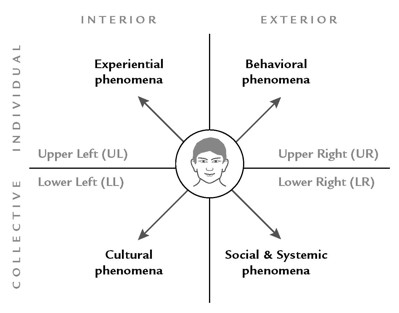
Could one combine these type of games with more traditional storytelling? It wouldn't be an easy task, going from all those macro perspectives, bird eye views and exteriors to micro perspectives, phenomenological truths and interiors. I would like to see people try, though. Another missed opportunity seems to be the way in which the controls of games and the actual playing of games can inform the systems we toy with, the narratives which emerge from those systems. I watch playthroughs of video games on youtube sometimes, and very seldom do I think I miss out on something relevant by my not actually holding the controller in my hand. There is the obvious example in Brothers: A Tale Of Two Sons, but other than that, it's often quite optional to actually play the game in order to understand the systems of a game as it relates to the themes it might explore.
I think it's an awesome game, succinctly and swiftly juggling complicated concepts and their relationship to one-another. I mean it's also very on the nose, but in a span of a minute or two it manages to explore quite a lot of ideas, and being quite terrifying in the process - even if it does so with the help of text and equations. It really does feel like a slap in the face, in more ways than one, and not only because it's very much in-your-face, but because it is just that and also speaks to my own experience which informs my understanding of the mechanics (understood as arguments/explorations) presented. But what kind of arguments does the game propose that might convince someone of something concerning its subject matter by virtue of its system, really?
It's not easy to separate "the system" from "the rest" of the game, but at all points during the game one could easily interject and claim that the systems prestented are misconstrued - because there is too little agency, because it misrepresents communication between the involved parties, demonises capitalists, working conditions, media, etc. And although I can both agree and argue with those criticisms (I understand that the game simplifies things in order to make a point), I cannot truthfully say that the mechanics of the game make good arguments in the sense that for example Parable of the Polygons by Vi Hart & Nicky Case does. Then again, that game is more of an interactive spreadsheet than something that feels like a work of art. It employs more of a didactic method in its truthsaying than the Socratic questioning more common to art with its many ambiguities.
Perhaps I'm being unfair to Anestesia here. Perhaps the fact that it manages to raise so many questions and topics for discussion is its strength, is in fact its method of teaching. We are dealing with two different beasts here, even if both approach the seemingly scientific by incorporating using the language of mathematics. I guess I would just like to see more games trying their hand at explorable explanations, newsgames, serious games. Remember those1? It was a while ago we saw September 12th or JFK Reloaded. Those two examples might actually be good to put side to side when I think about it. September 12th claims that for every terrorist that is killed by bombs, some civilians die, and they in turn become future terrorists. I find this idea fascinating, but once again the argument seems more in the vein of Anestesia - it takes a lot of context for that argument to make sense in my world, context which I take for granted, but context nonetheless. The game claims that it isn't a game but a simulation, a simple model one can use to explore some aspects of the war on terror, but I mean as a simulation it's just piss poor, honestly. It doesn't give me any reason to believe that the model it uses for simulation has any credibility. It's mostly a think piece.
JFK Reloaded on the other hand tries to recreate the actual day that JFK was murdered with the "facts" US citizens were told about the murder to either make the player recreate that scenario, or realize that in fact it couldn't have happened. It is journalism at play, basically. Or scientitic inquiry at play, rather. A similar game but placed in the here-and-now with another topic is Spent - The Interactive Poverty Experience (McKinney), an online game about surviving poverty and homelessness created by ad agency McKinney for pro bono client Urban Ministries of Durham (basically Cart Life but with actual statistics and actual examples).
Could one combine these type of games with more traditional storytelling? It wouldn't be an easy task, going from all those macro perspectives, bird eye views and exteriors to micro perspectives, phenomenological truths and interiors. I would like to see people try, though. Another missed opportunity seems to be the way in which the controls of games and the actual playing of games can inform the systems we toy with, the narratives which emerge from those systems. I watch playthroughs of video games on youtube sometimes, and very seldom do I think I miss out on something relevant by my not actually holding the controller in my hand. There is the obvious example in Brothers: A Tale Of Two Sons, but other than that, it's often quite optional to actually play the game in order to understand the systems of a game as it relates to the themes it might explore.
§§§
1One
could speak of influence transparency, construction transparency,
and reference transparency.
In video games, assumptions about the source and consequences of for
example technological advancements are sometimes presented, as in
Civilization 4, and are indeed needed to take into account to be
successful at the game. In Crude Oil, the authors assumptions about
the nature of oil prices, supply, and demand are all there, and
being transparent about the simplicity of hir formulas, zie is in
fact elucidating that it is possible for oil companies to operate on
similarly simplistic models for their own business operations. Games
such as these (Democracy 2 being a prime example) exemplifies a
different kind of citation than those in books, one that resembles a
journalist opening hir notebooks of interviews and research instead
of cherry picking a convenient quote.
– Newsgames,
Journalism at Play, Ian Bogost/Simon Ferrari/Bobby Schweizer
Tuesday, January 5, 2016
Living up to ideals - to queer or not to queer
As some sort of queer person, and at the very least a potential queer ally, I seem to believe that it's my duty to further queer art and queer communities. To shine light on smaller projects, games, which don't get much attention outside those communities. And so I make myself search out and play queer games. But sometimes I get tired of both the search and the playing. Often the payoff just isn't very good when compared to when I use other criteria to find good games than them being queer. I get tired of asking myself why I bother with playing those games if I don't have a dialogue with the queer communities which spawn them. But I don't very much wish to have that dialogue, and I don't necessarily enjoy myself enough to justify my playing through all those queer games.
And I guess that's what it comes down to. I just don't feel like I need to play another game with trans protagonists about trans issues, and often that's what those games have to offer me, and not much more. So the question I should be asking myself is perhaps "who am I trying to please here?" What lack am I making up for? It could be argued that I don't have to like or even play the games I wish to mention, but at the same times that begs the question why queer games are more worth caring for than other games which I enjoy more. Complicating this inquiry is my always having a hard time with relating to groups which I might belong to in ways I don't wish to address right now, but it doesn't make things any better when I feel I'm doing something which I wouldn't otherwise out of some sense of duty that isn't very well defined and has questionable effect.
These are not easy questions to answer, but for now let's just put it bluntly - it isn’t my job to like anybody’s game. Now, I'm off to do something I want to do as a human being instead of some idealistic identity political bullcrap.
And I guess that's what it comes down to. I just don't feel like I need to play another game with trans protagonists about trans issues, and often that's what those games have to offer me, and not much more. So the question I should be asking myself is perhaps "who am I trying to please here?" What lack am I making up for? It could be argued that I don't have to like or even play the games I wish to mention, but at the same times that begs the question why queer games are more worth caring for than other games which I enjoy more. Complicating this inquiry is my always having a hard time with relating to groups which I might belong to in ways I don't wish to address right now, but it doesn't make things any better when I feel I'm doing something which I wouldn't otherwise out of some sense of duty that isn't very well defined and has questionable effect.
These are not easy questions to answer, but for now let's just put it bluntly - it isn’t my job to like anybody’s game. Now, I'm off to do something I want to do as a human being instead of some idealistic identity political bullcrap.
Saturday, January 2, 2016
Playing with spoilers/informed playing
It's not as important for me anymore to go in blind into things. Sure, if I'm going into something which lasts an hour, I'd rather go in blind - I can replay it anyway. But if it's something longer and my hype isn't through the roof, I just might search out some more information concerning the alleged experience. I do this because one sees different things when one has knowledge of what's about to happen, or have some sort of context through which to analyze what's going on. If I've read that the game concerns itself with some sort of theme, or has a tragic ending, I can from a narrative and game-design perspective scan the game for thematic clues. It just might be a more interesting experience, especially if the game is convoluted in its handling of themes or I just don't have the mental powers to glean them myself. Another plus is that if I already know "what's about to happen", then there is a smaller chance of my playing just to find out what happens, which means that I can quit the game even if it's so-so but I want to know how it ends.
If would be cool if there was some sort of game wiki thing which worked as a sort of primer for specific video games and what one could be expecting from them upon play. It could be just a breakdown of conventions explored, or just questions one might try to answer when playing the game. For a game such as Life Is Strange, it could be things like "who writes what type of grafitti, what patterns can you discern and what functions do they serve?", "there are some animals in Life Is Strange - why these specific animals, why does Max happen upon them when zie does, and in what ways do they inform our understanding of different characters?", or "can the color coding of npc clothing reveal something or be read in interesting ways?".
I guess I just which there was more study/teaching material for video games in the same way that there are for books in American highschool movies. Resources where one could find study assignments for each chapter of a video game that makes one appreciate video game design more, to make one think more critically or just get a greater sense of meaning and context of the work as a historical piece, as part of a design school, as part of a genre, etc. I guess one thing that books have going for them is that spoilers aren't considered as important because the books that are being read are classics - we know already that Madame Bovary becomes insane, that Raskolnikov goes to prison, and K is executed and so we can discuss those things in the context of the whole book right from the first page. In that sense we need more Citizen Kane type videogames for sure.
If would be cool if there was some sort of game wiki thing which worked as a sort of primer for specific video games and what one could be expecting from them upon play. It could be just a breakdown of conventions explored, or just questions one might try to answer when playing the game. For a game such as Life Is Strange, it could be things like "who writes what type of grafitti, what patterns can you discern and what functions do they serve?", "there are some animals in Life Is Strange - why these specific animals, why does Max happen upon them when zie does, and in what ways do they inform our understanding of different characters?", or "can the color coding of npc clothing reveal something or be read in interesting ways?".
I guess I just which there was more study/teaching material for video games in the same way that there are for books in American highschool movies. Resources where one could find study assignments for each chapter of a video game that makes one appreciate video game design more, to make one think more critically or just get a greater sense of meaning and context of the work as a historical piece, as part of a design school, as part of a genre, etc. I guess one thing that books have going for them is that spoilers aren't considered as important because the books that are being read are classics - we know already that Madame Bovary becomes insane, that Raskolnikov goes to prison, and K is executed and so we can discuss those things in the context of the whole book right from the first page. In that sense we need more Citizen Kane type videogames for sure.
Wednesday, December 30, 2015
Critical Compilation - Mental Health/Illness
It took a long time and a lot of work to name it as trauma, and even more work, still ongoing, to understand how I could keep it from destroying my life.
/.../
I want to say people who loved me asked me to get help, or that I had some kind of breakthrough that I couldn’t spend the rest of my life that way, but that’s not what happened. What actually happened is that I played Bioshock Infinite.
/.../
for all the things it gets wrong — and it’s so, so many things — it gets so many things right about trauma.
/.../
Until the core physical experience of trauma — feeling scared stiff,
frozen in fear or collapsing and going numb — unwinds and transforms,
one remains stuck, a captive of one’s own entwined fear and
helplessness. The… perception of seemingly unbearable experiences leads
us to avoid and deny them, to tighten up against them and then split off
from them. Resorting to these “defenses” is, however, like drinking
salt water to quench extreme thirst. Booker’s split comes at a pivotal
baptism scene, implied to take place directly after Wounded Knee
although with no sign of the battle in sight. It’s here, the game tells
us, that one version of Booker decides to become Comstock, washing
himself clean of his sins, putting the past behind him, and eventually
going on to create the floating white theocracy of Columbia. Yet
Booker-as-Comstock is repression, stagnation, Peter Levine’s avoidance
and denial; he deals with his trauma by powerfully and absolutely
pretending it never happened.
That’s the salvific promise of the
game’s understanding of baptismal doctrine; but the past, it goes on to
show, cannot be wiped away. Columbia is Comstock’s monument to
everything he won’t deal with, a testament to the all-saving power of
staying stuck and the bandage on the unbindable wound of his actions.
With Columbia he can write a new story about Wounded Knee, about the
Boxer Rebellion, about the False Shepherd and the Lamb and the future
and himself. With Columbia he can pretend that everything is fine.
/.../Having a wife and a family could have been the coming back to life Booker needed, but instead, when it ends in tragedy, he turned to the violent, ugly life of the Pinkertons. Peter Levine writes, “Humans… reterrorize themselves out of their (misplaced) fear of their own intense sensations and emotions… [making] the process of exiting immobility fearful and potentially violent.”2 Or, as Comstock tells Booker, “It always ends in blood.” Unlike Comstock, Booker’s efforts are at least kinetic. He dives headfirst into the person he was, trying to solve his problems through the actions that caused them in the first place. Columbia was made for him by him, or another version of him. It is a playground for every one of his maladaptive coping strategies and a place where he can spin his wheels under the guise of getting better while simply rehashing the same old things. It ends in blood because he brings it, because he can’t bring anything else.
/.../
When it does go wrong, Columbia is
Booker’s ideal therapy room. In this floating city, everything that
wrecks his life on the ground leads to success. Non-Columbia Booker
clearly has a drinking problem, but in Columbia drinking makes him
healthier. Non-Columbia Booker is pretty broke, if the losing gambling
receipts in his room are any indication, but in Columbia people toss
their riches in the trash; money is easy to come by and easy to spend.
At the Good Time Club in Finkton, a powerful stranger offers Booker the
job of head of security and forces him to “audition” for the role,
according to the club’s marquee, through a series of increasingly
difficult wave battles. To me, this is Booker auditioning for
the role of himself, a chance to indulge in all the violent impulses
that lived in his heart through Wounded Knee and the Pinkertons and to
be lauded and praised for them. His annoyance and his determination to
just do the job that brought him to Columbia are all lies. There’s no
way he isn’t enjoying it, because it all makes sense; it feeds back in
on itself, re-traumatizing him, trapping him in that endless loop. He
drags Elizabeth into it too, helping her deal with her dead mother
through the same audition format: a series of wave battles with her
ghost to prove herself worthy of the dead woman’s love.
/.../
As I played through the end of Infinite
and the game made its strange sense of Booker’s story, I understood
what I had been doing to myself more clearly than any website or
pastel-covered self-help book had been able to point out. I saw how I’d
let my past define me, how I constantly ran it over in my mind, refusing
to try a new door, a new way, refusing to let anything else in. If people had done bad things to me I
couldn’t make them stop by doing bad things to myself. Just as Booker
couldn’t end the cycle of bloodshed with more bloodshed. Just as
Comstock couldn’t end denial with more denial. Booker’s looping timeline
showed me my own and pointed to the thing I seemed to most fear and yet
most want: that I’d be dead inside forever, because even though it was
terrible, at least I knew it was safe. When Booker decides to step away
from that, to let his past drown him at the baptism, to submit fully to
the weight of everything that happened… well. We don’t quite know if it
breaks the cycle, but at least it’s something new./.../
§
Mental illness in fiction is often used as a way to strip individuals of their humanity and, in doing so, reflects a cultural fear of what happens when we, too, descend. The horror of Eternal Darkness therefore lies not in the monsters your character must fight, but in the long-term impact of encountering those monsters.
/.../
While Eternal Darkness explores the descent into madness and casts insanity as something to be avoided at all costs, Psychonauts takes a more comprehensive view.
/.../
the game does not equate “mentally healthy” with being neurotypical in a direct fashion, nor does it tie competency to lack of mental illness or past trauma. Not only does pretty much every camper training to become a Psychonaut have traits that code for a mental illness—two happy campers are plotting suicide in attempt to gain more powers, a boy wears a tinfoil hat to avoid making things explode, and another child has extreme hydrophobia—but so do some of the camp instructors. Even characters that don’t have obvious coding, such as Raz, are shown to be wrestling with a deeper issue of one kind or another. For Raz to “fix” an issue obviously associated with a mental illness or help to resolve feelings over a past trauma, the person must be afflicted by it on some level; he does not assume particular eccentricities are a problem in the absence of related distress.
/.../
If Eternal Darkness is a game that speaks to “normal” people’s fear of going insane, Psychonauts is one that delves deeper into what being mentally healthy actually means. Eternal Darkness assumes it is impossible to see terrible things without going mad; Psychonauts largely assumes you’ve gone through something terrible, but recognizes the impact of that on your psyche is dependent on how you handle it and how your mental landscape looks otherwise.
§
I was taken aback by the idea of having a conversation with someone who my mind immediately identified as another enemy. Another body to add to my ever-increasing count in the game. But instead, here I was, talking and trying to coerce information out of someone who was clearly an intelligent being. This seemingly mundane occurrence of gently subverting the horror genre’s traditional Othering of its enemies into flawed but complex portrayals was one of the many achievements of Troika’s Vampire: The Masquerade – Bloodlines.
/.../
Games, particularly the ones that rely on having the players commit violent acts, have a poor reputation of stigmatizing mental illnesses through a negative portrayal, often equating people with such illnesses to monsters.
/.../
One common way the horror genre antagonizes those with mental health issues is by depicting them as exhibiting violent, psychopathic behaviour that threatens the safety of the player character. The endangerment of the player’s own well-being in the virtual world is a condition many action-based horror games use in order to justify the violent actions the player is then encouraged to commit towards the disabled bodies.
/.../
However, Othering goes beyond the problematic representation of enemies. Mechanics like sanity meters are commonly used in games like Eternal Darkness: Sanity’s Requiem to describe the mental state of the player character. If the meter is filled to its maximum, it would generally result in the player character going “insane” and trigger a fail state. This mechanisation is deeply problematic, as on top of reinforcing existing stereotypes about a group of people, it further deepens the stigma surrounding them by misrepresentation. One of the most common misconceptions perpetuated by the stigmatizing mechanics of horror games is the false notion that mental illnesses lead to criminally violent behaviour.
/.../
By establishing a setting which treats characters with mental illnesses with respect, Bloodlines tries to humanize key Malkavian non-player characters, and communicate empathy to the player.
/.../
Bloodlines is a strange and fascinating game on several levels. This is apparent already in the character creation scene. One of the six possible clans the players can role-play as, the Malkavians, are a group of vampires who suffer from a variety of mental illnesses including hallucination and schizophrenia. However, within Kindred — the colloquial term for the community of Vampires in the game’s universe — they are respected and treated as equals, and are often regarded as seers and oracles. Even within the Camarilla, the ruling body of the Kindred, Malkavians are given an equal seat of power, and thus represented fairly. By establishing a setting which treats characters with mental illnesses with respect, Bloodlines tries to humanize key Malkavian non-player characters, and communicate empathy to the player. Bloodlines consciously avoids this negative stereotyping by carefully portraying every Malkavian NPC you meet during the course of the game as non-aggressive.
/.../
dissociative identity disorder (DID). Bloodlines deals with this issue in an interesting way by utilizing the same approach it does with Malkavians. It treats them as who they are, first and foremost — humans. This can be seen with how the game deals with The Twins.
/.../
Both Therese and Jeanette are respected by other NPCs in the Bloodlines world and it presents an example of the game providing a safe space in its universe to the Malkavians. Seeing the world treat Malkavians like Therese/Jeanette with respect acts as a deterrent for the player to Other them for their mental illnesses. Bloodlines, by adding a personal background to the characters, humanizes them and makes it easier for player to empathize with them. By foregrounding their humanity, Bloodlines allows Therese/Jeanette’s character to evolve without forcing stereotypes pertaining to their condition. However, it doesn’t fully evade the problematic aspects of the representation of Malkavians. By presenting their personality traits as eccentric and mystical, it creates a stereotype which reduces every Malkavian to that specific set of characteristics.
/.../
Bloodlines’ ambition comes to the fore when the you as a player choose a Malkavian character to be your protagonist. Unlike other clans, a Malkavian Player Character (PC) has a largely different script and they often speak in convoluted and vague dialogues to other characters. These dialogues have a vague tone which may be cryptic and opaque to a first-time player. However, what’s interesting to note is that these very dialogues are designed to serve as foreshadowing to a player on a repeat playthrough of the game. Many of them subtly hint at major revelations well before they are actually scripted to occur in the game’s plot.
/.../
By doing that, Bloodlines also implies that while words of someone suffering from mental illnesses are often relegated to ramblings by society, they may contain wisdom that may require a deeper understanding. It still can be seen as a form of Othering, but without much of the negative connotations that stigmatize people with mental illnesses. The kind of understanding, which in the context of the game, that only players who have experienced the game would have.
/.../
while representing Malkavians as non-violent eccentrics subverts expectations established by horror tropes, that does not necessarily make them more relatable. Or do the methods Bloodlines employs fetishize characteristics we associate with people having mental conditions? It’s worth asking if representation in media always runs the risk of objectification on some level, no matter how nuanced it might be.
§
As a therapist, I’d like to say that every group session I’ve done with young people goes great. Unfortunately, the truth is that some sessions are marked less by epiphanies and more by blank stares, fighting, and crayon-eating. The main difference? Whether the day’s topic actually resonates with the group.
/.../
Instead of tearing up the floorboards and replacing all of our current analogies with gaming references, I suggest that we recognise video games as a font for cases where kids have already encountered (and often triumphed over) real-world issues. Mario Kart wasn’t just a thing that those kids knew — it was a place where they felt anger and betrayal. It confronted them with the fact that their friends don’t always support them. For those kids, a reference to Mario Kart was an acknowledgement of these complex experiences.
/.../
There was a pause as the boys mulled these questions over. One boy disagreed. He started to tell me how the situations were nothing alike, when another boy leapt to his feet. “I’m stuck, and I don’t know what to do,” he proclaimed. “But there could be something, I just haven’t thought of it. There’s no CPS wiki. But there could be.” That’s the power of gaming analogies. I didn’t have to sell them on changing their perspective or altering their behaviors. They found their own way in, using examples that were relevant in a context that was meaningful to them. Minecraft provided real experiences of being stuck and having to wait. Minecraft provided real alternatives to “think of all the people you’d like to threaten.” The boys had already encountered their current problem. What’s more, they’d already triumphed.
§
tension between the potential freedom afforded by games and the baggage that cannot be outrun is especially pronounced in games about anxiety and depression. How do you try on new identities when an emotional condition tinges everything? Is anxiety one of the things players leave behind or a part of real life that bleeds into games?
/.../
There is no shortage of games about anxiety and depression. The past year and a half has seen an explosion of small, personal games, all of which sought to address this subject in their own way.
/.../
I don’t want to be happier. I’d gladly settle for that, but it’s not a real goal. Instead, I only wish for a bit more perspective, just enough to get through the day with a minimum of fuss. The same is needed from videogames: A little more perspective on what they can and cannot tell us about others or ourselves. As in other media forms, anxiety and depression aren’t signs of artistic seriousness—you can be a serious artist or author without these afflictions—but they are challenges that should be taken seriously. We now have enough games to form a group therapy session and hope some greater context comes of the exercise. That context is needed—it is one of the few areas in which I am confident of not being alone.
§
One 2013 review from the American Psychological Association found that strategy videogames enhanced problem-solving skills in young children, and had the potential to increase “emotional resilience” in daily life. In-game failures aren’t a dead end for children, the report argues; rather, when presented with a conflict, young players create coping mechanisms that help them advance through the game. In real life, investing energy into everyday life can be an overwhelming experience for gamers with mood disorders. The sheer abundance of negative thoughts and feelings from depression can make the outside world feel too complex to handle. However, videogames are designed with a solution in mind for the player to achieve. They present an interactive space for the player to overcome conflicts without any real world consequences for failing. In gaming, we tend to believe, there’s no such thing as a permanent loss — just restarting.
/.../
XCOM also lets players choose Easy or Normal difficulty options for a much more manageable experience. In most situations, in-game risk has been diminished to the point where players simply have to use cover and prioritize enemy targets in order to win missions. So as the player learns the game’s mechanics at their own pace, they can also become more confident in their abilities to succeed, and subsequently move onto the harder difficulty levels. This is particularly important for players with depression or anxiety, who might have a low threshold for in-game challenge. Afterwards, they can take on the harder difficulty levels.
/.../
Take one article review published in the American Journal of Play, “Video Games: Play That Can Do Serious Good.” According to the authors, action, puzzle, and strategy videogames enhanced logical and visual information processing capabilities for their players. Extended time playing the strategy game Rise of Nations, for instance, improved “task switching, working memory, and abstract reasoning” among individuals suffering from age-related cognitive declines. Likewise, action and puzzle videogames improved players’ ability to prioritize decisions and quickly switch between tasks. Alongside cognitive therapy, videogames help the brain operate more efficiently while observing and understanding information. Hard data also shows that videogames can improve cognitive functioning, diminish the effects of depression and anxiety disorders, and can even be designed for therapeutic purposes. According to TIME, the cognitive behavioral therapy videogame SPARX successfully helped 44% of players completely overcome their depression, with 66% experiencing decreased depression symptoms after playing the game. Likewise, in a recent study at Michigan State University, researchers found that their shape-identification videogame “improved concentration and lessened anxiety for the anxious participants [who played the game].” Associate professor of psychology Dr. Jason Moser even concluded there was a potential to open a new market specifically for videogame therapy.
/.../
However, videogames are not a saving grace from mental illnesses. Overuse presents real barriers for behavioral therapy, and relying on a videogame for personal happiness can develop addictive habits in players. Without healthy boundaries and proper health care, mental illnesses can fester under gaming addictions.
§
The spinning blades are no more nonsensical than the chainsaw wielding maniac. Neither belongs in a mental institution,but they do belong in a campy/creepy game environment. The fact that the place purports to be some kind of madhouse probably won’t matter very much to what little narrative there might be. It’s wallpaper to act as a backdrop for bludgeoning and butchery. It could as easily be a carnival full of insane clowns or an abandoned hotel full of insane bellboys, or an insurance office full of insane filing clerks.
/.../
Earlier today, I had a peculiar reaction to the footage of The Evil Within that oozed through the clogged pipes of the interweb from the Eurogamer Expo and directly onto my screen. As Craig pointed out, the spinny-blade room is so daft that it’s immediately rendered non-threatening. Finding such a machine in a mental institution raises logistical questions rather than the hairs on the back of my neck.
/.../
at their best, games can implicate us in ways that traditionally observed media cannot and turn the screw an extra few degrees. However, games can also fill their corridors and torture chambers with the mad, and make otherness and illness things to defeat or to hide from rather than to engage with. That’s much less imaginative, much less empathic and, most damning of all in a creative industry, much less interesting.
§
This, we are made to understand, is how you become a heroine, a tomb raider. Our lead characters have to be hard, and while we accept a male hero with a five o'clock shadow and a bad attitude generally unquestioned, a woman seems to need a reason to be hard. Something had to have been done to her.
/.../
When you want to make a woman into a hero, you hurt her first. When you want to make a man into a hero, you hurt… also a woman first.
/.../
"Sherlock Holmes gets to be brilliant, solitary, abrasive, Bohemian, whimsical, brave, sad, manipulative, neurotic, vain, untidy, fastidious, artistic, courteous, rude, a polymath genius. Female characters get to be Strong." Further, we seem to have problematic ideas of how women become Strong -- men break them, we assume.
/.../
Abstracted ideas about post-traumatic stress disorder or the catch-all "mental health issues" are common in games -- apparently the logic is if we're trying to advance narratives in action games, we need to find nuanced rationales for why we're killing so many people with aplomb.
§
The mentally ill make for good villains, across all media in fact. You see, we just don't stop, we don't know how. We can't listen to reason, so the question of the appropriateness of force is taken away from you, the protagonist. We make things easy as well, because ultimately, we want to die. Not the clean, pure death urge of the hero either, who stakes his life on the promise of a better world; we just want to be put out of our misery.
/.../
We need to be able to show the difference between madness and malice, because ideologies spread in a way that madness doesn't.
§
This is why Depression Quest is not simply an “empathy game” that MAKES you understand depression, and why it is something more valuable.
§
Errant Signal - Actual Sunlight + Depression Quest (Spoilers)
§
I wanted to start from one simple word, one that is used by marketing departments and journalists alike; it pervades reviews, previews, the lexicon of indie games and it trickled down to gamers themselves. The word ‘addictive’. Gaming is, as far as I know, the only community in which the word addictive is considered a positive.
[This piece is really personal and hit home for me, even if my story with depression is quite different and has made me play less and not more games for the last ten years (but before that, yep, had me playing Baldur's Gate 2 constantly for three months).
§
A visual novel about a group therapy session for final girls.
Brendan Vance on form, content, ideology and appropriation in modern media - a series in three parts
For a Twiney interactive context of the three texts in question, check out Brendans website dedicated to the three texts.
1.
Any designed work can be decomposed into two different kinds of features: Intrinsic features and extrinsic features. An intrinsic feature is something we judge to be a non-reducible atom of actual value that the audience wants and the work provides—that is, the work’s purpose—while an extrinsic feature is anything that exists solely to realize that purpose, providing no actual value in itself.
/.../
The intrinsic features of Art media like literature or film, unlike those of hammers and map APIs, are not easily reducible into language. Whereas to design a hammer involves finding ways of realizing features whose value is readily apparent, to make Art is to search for value lying beyond the edges of our understanding: To capture something we know is important to us even though we cannot quite say why.
/.../
Videogames inherit a little from Art but mostly from product design, which has been kind of a problem for us. As an industry we put faith in the idea that there is intrinsic value in the games we develop, although we don’t think very expansively about what that could be; instead we abstract it, using ugly words like “content” as placeholders for value without ever proving that it truly exists. We then set about designing incredible machines that shuttle players towards these placeholders with extremely high efficiency, which as designers is really what we’re good at. We make the interface as usable as we can because players need it in order to learn the rules. We teach the rules very carefully because players need them in order to grok the dynamics. We shape our dynamics strategically because enacting them is what will stimulate players to feel the aesthetics. Somewhere at the core of all this, we suppose, lives the “content” players are attempting to access: That which we have abstracted away so that we could hurry towards doing safe, understandable product design rather than risky, unfathomable Art.
/.../
Problem Attic is an unfashionable game. It does not aspire to resemble that which currently exists but with a cool twist, nor to stuff all its value into the margins of a popular genre format. It is authored, rather than just designed; its intrinsic features take the form of complex and multifaceted statements that it realizes at all levels of the modern videogame, from core systems all the way up to the user interface. It is messy and, therefore, alive.
/.../
Everything we see is built from colourful, patterned tiles. Although there are perhaps twenty or thirty different kinds, most are not mechanically distinct from one another; all space is partitioned into two contiguous parts, ‘wall’ versus ‘not-wall’, with each patterned tile corresponding to one of the two. Our first instinct is to label this a poor design choice because its affordances are unclear. (Why should the player have to learn through physical experience which tiles can be traversed and which cannot when it could be made visually obvious?) This, however, would be a mistake. Conventional thinking conditions us to believe clear affordances are unequivocally good because we view videogame design as an exercise in catapulting people towards the mythical content unicorn lying beneath all of our systems; this belief becomes invalid, however, when unclear affordances better support some other intrinsic purpose lying elsewhere in the structure of the work, and that is the case here. The environment of Problem Attic models the mind of the protagonist, and the walls represent the tangled mess of every habit and belief he has ever internalized. Each person possesses such walls; they are the reason why we act against our own best interests, making the same mistakes over and over again.
/.../
Here is another unfashionable choice. Punishing us for touching the Cross Guys even though that is exactly what we must do to proceed reeks of poor affordances; it seems to place the design at cross purposes, obfuscating the rules of the system and causing us to form an inaccurate cognitive model of how the game works. Again, however, Attic demonstrates that clear affordances are not unequivocally good. This game is about human beings, who result not from mythical content unicorns but from a roiling maelstrom of culture and fraying DNA. The Cross Guys are characters, not mechanics, and the game characterizes them as simple-minded horndogs who give no consideration to the protagonist’s goals and, in fact, seek solely to gratify themselves at his expense. In their role as the protagonist’s jailers they must usually be avoided; in their role as the wielders of power, however, it is occasionally necessary to exploit them even when this does us harm. (The mechanics deceive, in other words, because they model deceptive power structures.) That the world forces some among us to use the ugliest of personal traits to their advantage would, in any other context, be considered a thoughtful bit of hard-won wisdom that speaks to the human condition. In videogames we are, for many discomforting reasons, unaccustomed to receiving such wisdom.
/.../
We may not confront the Cross directly; it cannot be destroyed or pacified. We must instead discover a circuitous route through a maze of nearly-invisible wall tiles, the room’s muddy platforming permitting us to feel the protagonist’s paralysing fear. Interestingly, pressing the magical ‘R’ key here does not reset the stage as it normally would, but instead fades the world to black before casting us out to the attic’s entry point. This particular stage, I hereby surmise, is not a place for trial and error, to learn or to grow; it is more like a wound that won’t heal, a nightmare to which the protagonist returns nightly.
/.../
Problem Attic changed the way I think about videogames. I am now convinced that the virtues of clarity and craft, to which I had subscribed absolutely as a matter of course, impose significant limitations on our expressive potential that can be difficult to see until you play something like this.
2.
DOET [Design of Everyday Things] judges the user’s needs most important, and her perspective most valuable. It is about the apotheosis of the user; it makes her into God, and with holy might it strikes the fear of Her into objects and those who make them.
/.../
DOET, alongside all the important research around it, culminated in something called User Centered Design, a philosophy in which “user error” does not exist and programmers are sad.
/.../
This school teaches that if it’s not fun (or at the very least quick and painless) to be taught about some feature, we shouldn’t include it; that clarity is better than complexity; that elegance is better than messiness; that one button is better than two. It teaches that the purpose of a game is to explain itself to you, and that somewhere in the act of explaining lies that game’s intrinsic value. We have thereby converted the scariest, most contentious question of all (what should this thing be?) from an artistic decision into a design decision.
/.../
Our belief in clarity and elegance, though it has yielded spectacular results, is not the very best way to make videogames; it may not even be a particularly good way. We suffer from the bar we’ve set for ourselves and the burdens we place upon designers. We are wrongly convinced, even in the critical community, that works like Problem Attic are unworthy of attention solely because they prioritize different features and challenge players in a way we deem to be unfashionable.
/.../
I plan on thinking much harder about how I evaluate potential game features. “Because then the user doesn’t have to think” or “but how do we teach that?” should not be trump cards in every single argument about whether to include stuff. It’s easy to turn everything into a neat little design decision, but making a few more artistic ones would be better in the long term for users and for my sanity
3.
I develop videogames for a living, but I spent last year really hating videogames. I questioned how it was I could consume 60 hours of ‘content’ for Assassin’s Creed 3 yet feel utterly unsatisfied by my act of consumption. I questioned what it was I had consumed, other than my own time. I questioned what it was I sought from the game in the first place. I questioned the nature of the ‘content’ it claimed to offer me; privately I began to suspect it might not even exist.
/.../
I awoke from my yearlong stupor the night I encountered a game called Problem Attic by a person named Liz Ryerson.
/.../
This is a story about how Steam, Twitter and the App Store came to exist. It’s about how these services present themselves as our friends while behaving as our enemies. It’s about how they stole the internet from us, creating a place where everything is ‘free’ but liberty remains unavailable. Before I can reclaim my lost appendages we must first reclaim something more fundamental: Our language, the medium through which we think. Consider the power inherent in the words ‘form’ and ‘content’. ‘Form’ describes what the things we make are; thus they who define form decide what things can be. ‘Content’ is more powerful still because it defines what we want; they who define content decide what is and is not valuable. Like all powerful words, ‘form’ and ‘content’ have a political history.
/.../
To Hegel what we want from our media is not merely a convenient way to waste 60 hours of our lives: What we want is access to universal truths.
/.../
When we consider Art in Hegelian terms its purpose is not mysterious or difficult to grasp. For him Art is simply one of three different kinds of form (the other two being philosophy and religion) through which humans access the same content: Geist, the omnipresent mind and spirit of living ideas.
/.../
Hegel once declared, famously and obliquely, that ‘art is dead’. Scholars do not agree on precisely what he meant by this, but my preferred interpretation suggests the art we fully understand is, by definition, already in the past. Art of the present must be alien, unfathomable and difficult to identify because it is of young mind/spirit. It is the bleeding edge of truth, reaching beyond what is achievable through discursive means to seize something new and untamed. Spelunky has a spirit I can feel as I play it. I need not feel anxious about whether its procedurally-generated elements (its Rogue-like parts) permit some kind of ‘meaningful artistic statement’. Rather, it is through enacting and observing the movement of these elements that its spirit, the Spelunkengeist, shall gradually come to life.
/.../
I believe our intrepid capitalists of yesteryear used newspapers, and other forms of mass publication, to introduce a new politics of form and content to the world. Where Hegel used these terms to distinguish ‘the work itself’ (form) from ‘the ideas behind it’ (content), the newspaper uses them to distinguish ‘the machine that aggregates/distributes’ from ‘the writing that fuels this machine’. What once was called ‘form’ is now ‘content’, and what Hegel would call content can no longer be described; it has fallen so far into obscurity that I must resurrect a 19th century German term just to communicate it in English.
/.../
The concept of ‘replay value’, so critical to today’s hottest newspaper-likes, stems directly from this formula: Since we evaluate ‘content’ quantitatively it follows that a publication or videogame could increase the value of its ‘content’ either by improving yield or reducing the cost of production. We have hereby come to prefer our ‘content’ the same way we prefer our pig feed: Smooth tasting, from an Ikea-branded trough. Think about how a 19th century philosopher like Hegel might regard the concept of ‘replay value’. Would he commiserate with us about how the mind/spirit of romanticism just doesn’t make for large enough murals? Or would we have to pull out a bunch of obscure 21st century English words just to explain to him what the hell we were talking about? It’s important to realize that ‘replay value’ is not some timeless virtue sought by all media for all of history. It is a political viewpoint wrapped in a sales pitch perpetuated by people trying to improve the market position of their mass-produced entertainment products. By appropriating the word ‘content’, which denotes what we want, our intrepid capitalist marketers have steered us away from the conceptual, spiritual and artistic content Hegel envisions. All we want now is more stuff for a lower price.
/.../
As a multicast medium the internet is not a seller’s market; it is, in fact, the greatest buyer’s market of all time. The writer’s predicament no longer involves convincing some corporation to make copies of her words; that part is practically free. Her predicament now involves capturing the attention of an audience with virtually limitless options available to it, then somehow converting this hard-won attention into half of a living wage (presumably through a pagan ritual like crowdfunding).
/.../
our intrepid capitalists sought to appropriate the concept of freeness while appending a commercial twist: They planned for web services to become free as in gratis, turning “do it yourself” into “here, let me publish that for you in exchange for the right to profit from it and oh, by the way, have a look at this Chevy ad”. In the span of three or four years everything about the internet changed: The do-it-yourself, Geocities-like, weird internet of the mid ’90s became the professional, social networked, boring internet we have today. We retroactively labelled this movement ‘Web 2.0’, a term describing the set of technologies and design/business axioms that on the surface intend to anoint the user as a free (libre) contributor rather than powerless consumer while on the underside exploiting her contributions as freely given (gratis) ‘content’ to be sold as a commodity. The idea was to craft a sales pitch around the prospect of creating Hegelian content, content as libre, while simultaneously converting readers’ contributions into ‘content’ as gratis to fill the paper’s pages. They no longer intended to act as gatekeepers between producer and consumer; all consumers would now become producers, multicasting ‘content’ back and forth to one another through the ‘form’ of the all-in-one medium/product/town hall/marketplace the newspaper would soon become.
/.../
Where the newspaper transfixed the reader by telling her what happened recently the web service would tell her what’s happening right now. Where the newspaper monetized its audience through crude instruments like subscriptions and broadly-focused mass advertising the web service would seek to monetize everything: The user’s personal relationships, her attention, her demographic data, her politics, her labour, her secrets, her entire life. Our beleaguered dreamers would finally get their wish. The user would no longer be a powerless consumer. Instead she would become something much worse. She’d become ‘content’ itself, a person qua commodity whose only real power lies in her potential to be consumed. She would be a human AA battery, in other words, digested one limb at a time by the hundreds of giant software systems now descending upon her.
/.../
Gone is the HTML/CSS with which we contended in the MySpace era; gone is the bloated wall of features we encounter every time we open Facebook. Just like a videogame the Tweet™ is easy to learn, difficult to master and punctual with its feedback. (Twitter has excellent game feel.)
/.../
When we encounter a situation like Sarkeesian’s, something outside the parameters of the sales pitch, our typical response is to blame it on some hostile other (‘the trolls’) or some fundamental defect in the internet. Though we may chide Twitter for failing to develop effective anti-harassment policies we reason the blame must lie ultimately with us users; after all, the sales pitch convinces us that Twitter makes us free as in libre, and ‘a few (hundred thousand) bad apples’ may therefore choose freely to do harm. We neglect to consider the possibility that Twitter did not fail at anything; that preventing harassment has never been Twitter’s goal because the service has far more to gain from permitting this sort of bullying than it does from preventing it (new and more interesting ‘content’, increasing entrenchment in its role as town square, more investment from users, etc…). As far as Twitter is concerned the ideal anti-harassment policy is just effective enough to prevent Sarkeesian from leaving while simultaneously permitting thousands of people to enjoy harassing her every day. In this way Twitter doesn’t need to engage directly in the Charles Foster Kane-style yellow journalism of its predecessors; it reaps the same rewards (while incurring very few of the risks) by allowing users to do so on its behalf. So long as we continue holding Twitter solely to the standard of its sales pitch the service remains free (as in libre) to preside as a ‘neutral third party’ over the very culture wars it facilitates, dropping a Promoted Tweet™ or two into our timelines between all the vicious bile.
/.../
We ought to regard the Tweet™ suspiciously, as a glorified status update tuned more towards Twitter’s data mining business than to our ostensibly free expression. We ought to insist Twitter shape itself around our work rather than shaping our work eagerly into Twitter’s business model (and thanking it for the privilege). We ought at least to demand Twitter use some of its extraordinarily lucrative data mining expertise to fight the harassment of our peers rather than tacitly affording it. Instead we fixate on the libre hand dangling a new social appendage in front of us while the gratis hand converts all our ‘freely given’ energy into its own money and power.
/.../
The ‘form’ of Twitter, like that of the newspaper, demands a constant stream of new things to bury all the old ones. It wants there to be cases in which we miss things so we’ll adopt the underlying assumption that work should shoot past us like a copy of The New York Times rather than stand in permanence like the Bible, awaiting our approach. The bell curve we see is not the inevitable product of posting work on the internet; it’s the product of routing our work through a host of different web services designed to consume the new and then discard it. We chide Twitter for how ineffectual its search functions are, how challenging it is to obtain any legible historical record of our contributions to the free dialog its sales pitch claims is taking place. We ignore the implicit acknowledgement that Twitter does not want us to remember this history; that in fact, Twitter wants us to forget. It wants us to depend on new ‘content’ rather than dwelling in the old. It wants us to have a presence to maintain rather than construct. It wants us to forget the name of the author we just read but remember to Tweet™ it at all our friends no more than two or three times. It wants to be a windswept desert made from a billion atoms of homogeneous and disassociated ‘content’, ‘freeing’ us to build castles in the sand. The libre hand promises us an oasis while the gratis hand c converts the whole internet into a desert.
/.../
As developers our game can be good or bad; we can self-promote or be totally obscure; we can spend a year in development or three days. All these variables are completely non-predictive. Nobody knows how success on the App Store actually works and no one ever has; hiring some ex-Apple consultant to help us would be about as effective as ritualistically slaughtering a goat. The App Store is a madhouse in which success is entirely arbitrary. Usually when we find ourselves participating in an arbitrary selection process granting invariably low odds of success we don’t call that ‘egalitarian’; we call it buying a lottery ticket. Every game theorist knows lottery tickets are a waste of our time and money. The mistake we make when dealing with the App Store is, once again, watching only the libre hand as it offers us the chance of a generous reward for our hard work; we ignore the gratis hand tossing our name into a hat. This is why, looking upon the madhouse, our response is to assume there is some defect in the service, perhaps poor ‘discoverability’ or a lack of curation. We neglect to realize that from Apple’s perspective these are not defects. Apple presides, as a ‘neutral third party’ of course, over a lottery that generates ~30% royalties regardless of who wins. They have no reason to ‘curate’ or to make our apps ‘discoverable’. Their goal is to do just enough to keep players and developers imprisoned in the ‘ecosystem’, locking everyone inside a horrific Thunderdome of their creation (oops, I mean a ‘walled garden’) while charging admission for the privilege. When we observe today’s class of small, broke, powerless game studios subsisting from tiny mobile project to tiny mobile project, we typically attribute their existence to an apathetic audience and/or soulless business executives. We neglect to notice how convenient our ‘neutral third parties’ might find it that these developers are incapable of renegotiating the royalties they pay or, say, founding a new ‘ecosystem’ of their own. Today we see Valve travelling in the same direction as Apple, and we wonder whether Gabe Newell can ‘fix’ the madhouse. If you’re Gabe Newell the madhouse is not broken.
/.../
Consider, most damningly of all, the ways in which the web service makes our work interchangeable. We approach Twitter, Steam and the App Store with the newspaper-like mentality that wider distribution is always better. We neglect to realize the internet is a buyer’s market: Maximum distribution means maximum competition between ‘content creators’ alongside minimum risk for the marketplace itself. Not only does this make it difficult for developers to carve out an audience; it also creates tremendous downward pressure on the value of our work. Anyone intending to charge money for their videogame faces an army of competitors willing to give theirs away for less, or for free. The audience sees little difference between one piece of work or another; it wants what the medium tells it to want, so what it wants is ‘content’.
/.../
We do indeed face an existential threat. Our wallets, however, are the only place we shouldn’t look. We fail to realize the closer we get to ‘free’ the higher the hidden cost, and the more our intrepid usurpers profit from the ruin of everything around them.
/.../
the change I want must resemble the form of Attic itself: A tiny fire in a mound of corporate detritus, growing a little at a time.
/.../
For years beforehand my thinking had actually been fairly pro-capitalist; I often espoused the myriad benefits of currency and commerce. What I never did was consider the problem in terms of consumption versus communion. I realize now I had fallen for the sales pitch. This is not to say, however, that I currently advocate some bloody communist revolt circa 1917. Instead I believe in sublation as Hegel describes it. The internet is not some idyllic communist utopia ruined forever by capitalist invaders; that is not the whole truth. Without capital the internet would be a weird intellectual ghetto; without community it would be a hopeless corporate nightmare. It was the coalescence of these forces that gave the internet its mind/spirit and created the Information Age. Neither force is capable of simply erasing the other; thus, the whole truth must result from both of them. The only way forward is to let them merge together into something completely new. The heart of my complaint, then, is not merely that predatory corporations exist on the internet. It’s that we don’t recognize them for what they are. It’s time to accept what ‘free’ really means, and to demand an equitable share of the proceeds our labour generates.
/.../
The most important tool you have against capitalist hegemony is understanding the whole nature of the transactions you perform. Remember you are not merely a ‘content creator’ if you don’t want to be. You don’t have to alienate the form of your work from its content, shaving all the edges off so it can exist as a grain of sand in someone else’s desert. Make the work YOU want to make and shove it down the internet’s throat. We who Twitter views as ‘content creators’ now live in a world where, paradoxically, the most anti-capitalist measure we could take is to charge money for things. I believe we need to do this whenever possible.
/.../
Recall that Hegel models ideas as fundamentally historical: Free structures of thought whose lineage stretches all the way back into antiquity, guided forward by the recollection of past mistakes. Yet in the capitalist dystopia we are quickly coming to inhabit there are no ‘ideas’ anymore. There is no form, no content and no libre; we live in a world where ‘free’ means gratis, ‘form’ means Twitter and ‘content’ means Tweets™. Recall that appropriation is what capitalists do best. The goal of appropriation is to erase history entirely: To focus solely on the eternal now, divorced from all context, leaving us no basis on which to make choices.
/.../
Your latest project does not need to exist solely as two weeks’ worth of viral bait in someone else’s ‘ecosystem’. The projects you’ve done in the past do not need to languish as half-eaten corpses somewhere in a forgotten database. Create a history for your work by interconnecting it in meaningful and permanent ways (not just in Twitter mentions). Provide paths from the new to the old. Connect it permanently to other people and ideas so that these ideas can grow. Your work is not a commodity; it’s alive. Build a home for it.
1.
Any designed work can be decomposed into two different kinds of features: Intrinsic features and extrinsic features. An intrinsic feature is something we judge to be a non-reducible atom of actual value that the audience wants and the work provides—that is, the work’s purpose—while an extrinsic feature is anything that exists solely to realize that purpose, providing no actual value in itself.
/.../
The intrinsic features of Art media like literature or film, unlike those of hammers and map APIs, are not easily reducible into language. Whereas to design a hammer involves finding ways of realizing features whose value is readily apparent, to make Art is to search for value lying beyond the edges of our understanding: To capture something we know is important to us even though we cannot quite say why.
/.../
Videogames inherit a little from Art but mostly from product design, which has been kind of a problem for us. As an industry we put faith in the idea that there is intrinsic value in the games we develop, although we don’t think very expansively about what that could be; instead we abstract it, using ugly words like “content” as placeholders for value without ever proving that it truly exists. We then set about designing incredible machines that shuttle players towards these placeholders with extremely high efficiency, which as designers is really what we’re good at. We make the interface as usable as we can because players need it in order to learn the rules. We teach the rules very carefully because players need them in order to grok the dynamics. We shape our dynamics strategically because enacting them is what will stimulate players to feel the aesthetics. Somewhere at the core of all this, we suppose, lives the “content” players are attempting to access: That which we have abstracted away so that we could hurry towards doing safe, understandable product design rather than risky, unfathomable Art.
/.../
Problem Attic is an unfashionable game. It does not aspire to resemble that which currently exists but with a cool twist, nor to stuff all its value into the margins of a popular genre format. It is authored, rather than just designed; its intrinsic features take the form of complex and multifaceted statements that it realizes at all levels of the modern videogame, from core systems all the way up to the user interface. It is messy and, therefore, alive.
/.../
Everything we see is built from colourful, patterned tiles. Although there are perhaps twenty or thirty different kinds, most are not mechanically distinct from one another; all space is partitioned into two contiguous parts, ‘wall’ versus ‘not-wall’, with each patterned tile corresponding to one of the two. Our first instinct is to label this a poor design choice because its affordances are unclear. (Why should the player have to learn through physical experience which tiles can be traversed and which cannot when it could be made visually obvious?) This, however, would be a mistake. Conventional thinking conditions us to believe clear affordances are unequivocally good because we view videogame design as an exercise in catapulting people towards the mythical content unicorn lying beneath all of our systems; this belief becomes invalid, however, when unclear affordances better support some other intrinsic purpose lying elsewhere in the structure of the work, and that is the case here. The environment of Problem Attic models the mind of the protagonist, and the walls represent the tangled mess of every habit and belief he has ever internalized. Each person possesses such walls; they are the reason why we act against our own best interests, making the same mistakes over and over again.
/.../
Here is another unfashionable choice. Punishing us for touching the Cross Guys even though that is exactly what we must do to proceed reeks of poor affordances; it seems to place the design at cross purposes, obfuscating the rules of the system and causing us to form an inaccurate cognitive model of how the game works. Again, however, Attic demonstrates that clear affordances are not unequivocally good. This game is about human beings, who result not from mythical content unicorns but from a roiling maelstrom of culture and fraying DNA. The Cross Guys are characters, not mechanics, and the game characterizes them as simple-minded horndogs who give no consideration to the protagonist’s goals and, in fact, seek solely to gratify themselves at his expense. In their role as the protagonist’s jailers they must usually be avoided; in their role as the wielders of power, however, it is occasionally necessary to exploit them even when this does us harm. (The mechanics deceive, in other words, because they model deceptive power structures.) That the world forces some among us to use the ugliest of personal traits to their advantage would, in any other context, be considered a thoughtful bit of hard-won wisdom that speaks to the human condition. In videogames we are, for many discomforting reasons, unaccustomed to receiving such wisdom.
/.../
We may not confront the Cross directly; it cannot be destroyed or pacified. We must instead discover a circuitous route through a maze of nearly-invisible wall tiles, the room’s muddy platforming permitting us to feel the protagonist’s paralysing fear. Interestingly, pressing the magical ‘R’ key here does not reset the stage as it normally would, but instead fades the world to black before casting us out to the attic’s entry point. This particular stage, I hereby surmise, is not a place for trial and error, to learn or to grow; it is more like a wound that won’t heal, a nightmare to which the protagonist returns nightly.
/.../
Problem Attic changed the way I think about videogames. I am now convinced that the virtues of clarity and craft, to which I had subscribed absolutely as a matter of course, impose significant limitations on our expressive potential that can be difficult to see until you play something like this.
2.
DOET [Design of Everyday Things] judges the user’s needs most important, and her perspective most valuable. It is about the apotheosis of the user; it makes her into God, and with holy might it strikes the fear of Her into objects and those who make them.
/.../
DOET, alongside all the important research around it, culminated in something called User Centered Design, a philosophy in which “user error” does not exist and programmers are sad.
/.../
This school teaches that if it’s not fun (or at the very least quick and painless) to be taught about some feature, we shouldn’t include it; that clarity is better than complexity; that elegance is better than messiness; that one button is better than two. It teaches that the purpose of a game is to explain itself to you, and that somewhere in the act of explaining lies that game’s intrinsic value. We have thereby converted the scariest, most contentious question of all (what should this thing be?) from an artistic decision into a design decision.
/.../
Our belief in clarity and elegance, though it has yielded spectacular results, is not the very best way to make videogames; it may not even be a particularly good way. We suffer from the bar we’ve set for ourselves and the burdens we place upon designers. We are wrongly convinced, even in the critical community, that works like Problem Attic are unworthy of attention solely because they prioritize different features and challenge players in a way we deem to be unfashionable.
/.../
I plan on thinking much harder about how I evaluate potential game features. “Because then the user doesn’t have to think” or “but how do we teach that?” should not be trump cards in every single argument about whether to include stuff. It’s easy to turn everything into a neat little design decision, but making a few more artistic ones would be better in the long term for users and for my sanity
3.
I develop videogames for a living, but I spent last year really hating videogames. I questioned how it was I could consume 60 hours of ‘content’ for Assassin’s Creed 3 yet feel utterly unsatisfied by my act of consumption. I questioned what it was I had consumed, other than my own time. I questioned what it was I sought from the game in the first place. I questioned the nature of the ‘content’ it claimed to offer me; privately I began to suspect it might not even exist.
/.../
I awoke from my yearlong stupor the night I encountered a game called Problem Attic by a person named Liz Ryerson.
/.../
This is a story about how Steam, Twitter and the App Store came to exist. It’s about how these services present themselves as our friends while behaving as our enemies. It’s about how they stole the internet from us, creating a place where everything is ‘free’ but liberty remains unavailable. Before I can reclaim my lost appendages we must first reclaim something more fundamental: Our language, the medium through which we think. Consider the power inherent in the words ‘form’ and ‘content’. ‘Form’ describes what the things we make are; thus they who define form decide what things can be. ‘Content’ is more powerful still because it defines what we want; they who define content decide what is and is not valuable. Like all powerful words, ‘form’ and ‘content’ have a political history.
/.../
To Hegel what we want from our media is not merely a convenient way to waste 60 hours of our lives: What we want is access to universal truths.
/.../
When we consider Art in Hegelian terms its purpose is not mysterious or difficult to grasp. For him Art is simply one of three different kinds of form (the other two being philosophy and religion) through which humans access the same content: Geist, the omnipresent mind and spirit of living ideas.
/.../
Hegel once declared, famously and obliquely, that ‘art is dead’. Scholars do not agree on precisely what he meant by this, but my preferred interpretation suggests the art we fully understand is, by definition, already in the past. Art of the present must be alien, unfathomable and difficult to identify because it is of young mind/spirit. It is the bleeding edge of truth, reaching beyond what is achievable through discursive means to seize something new and untamed. Spelunky has a spirit I can feel as I play it. I need not feel anxious about whether its procedurally-generated elements (its Rogue-like parts) permit some kind of ‘meaningful artistic statement’. Rather, it is through enacting and observing the movement of these elements that its spirit, the Spelunkengeist, shall gradually come to life.
/.../
I believe our intrepid capitalists of yesteryear used newspapers, and other forms of mass publication, to introduce a new politics of form and content to the world. Where Hegel used these terms to distinguish ‘the work itself’ (form) from ‘the ideas behind it’ (content), the newspaper uses them to distinguish ‘the machine that aggregates/distributes’ from ‘the writing that fuels this machine’. What once was called ‘form’ is now ‘content’, and what Hegel would call content can no longer be described; it has fallen so far into obscurity that I must resurrect a 19th century German term just to communicate it in English.
/.../
The concept of ‘replay value’, so critical to today’s hottest newspaper-likes, stems directly from this formula: Since we evaluate ‘content’ quantitatively it follows that a publication or videogame could increase the value of its ‘content’ either by improving yield or reducing the cost of production. We have hereby come to prefer our ‘content’ the same way we prefer our pig feed: Smooth tasting, from an Ikea-branded trough. Think about how a 19th century philosopher like Hegel might regard the concept of ‘replay value’. Would he commiserate with us about how the mind/spirit of romanticism just doesn’t make for large enough murals? Or would we have to pull out a bunch of obscure 21st century English words just to explain to him what the hell we were talking about? It’s important to realize that ‘replay value’ is not some timeless virtue sought by all media for all of history. It is a political viewpoint wrapped in a sales pitch perpetuated by people trying to improve the market position of their mass-produced entertainment products. By appropriating the word ‘content’, which denotes what we want, our intrepid capitalist marketers have steered us away from the conceptual, spiritual and artistic content Hegel envisions. All we want now is more stuff for a lower price.
/.../
As a multicast medium the internet is not a seller’s market; it is, in fact, the greatest buyer’s market of all time. The writer’s predicament no longer involves convincing some corporation to make copies of her words; that part is practically free. Her predicament now involves capturing the attention of an audience with virtually limitless options available to it, then somehow converting this hard-won attention into half of a living wage (presumably through a pagan ritual like crowdfunding).
/.../
our intrepid capitalists sought to appropriate the concept of freeness while appending a commercial twist: They planned for web services to become free as in gratis, turning “do it yourself” into “here, let me publish that for you in exchange for the right to profit from it and oh, by the way, have a look at this Chevy ad”. In the span of three or four years everything about the internet changed: The do-it-yourself, Geocities-like, weird internet of the mid ’90s became the professional, social networked, boring internet we have today. We retroactively labelled this movement ‘Web 2.0’, a term describing the set of technologies and design/business axioms that on the surface intend to anoint the user as a free (libre) contributor rather than powerless consumer while on the underside exploiting her contributions as freely given (gratis) ‘content’ to be sold as a commodity. The idea was to craft a sales pitch around the prospect of creating Hegelian content, content as libre, while simultaneously converting readers’ contributions into ‘content’ as gratis to fill the paper’s pages. They no longer intended to act as gatekeepers between producer and consumer; all consumers would now become producers, multicasting ‘content’ back and forth to one another through the ‘form’ of the all-in-one medium/product/town hall/marketplace the newspaper would soon become.
/.../
Where the newspaper transfixed the reader by telling her what happened recently the web service would tell her what’s happening right now. Where the newspaper monetized its audience through crude instruments like subscriptions and broadly-focused mass advertising the web service would seek to monetize everything: The user’s personal relationships, her attention, her demographic data, her politics, her labour, her secrets, her entire life. Our beleaguered dreamers would finally get their wish. The user would no longer be a powerless consumer. Instead she would become something much worse. She’d become ‘content’ itself, a person qua commodity whose only real power lies in her potential to be consumed. She would be a human AA battery, in other words, digested one limb at a time by the hundreds of giant software systems now descending upon her.
/.../
Gone is the HTML/CSS with which we contended in the MySpace era; gone is the bloated wall of features we encounter every time we open Facebook. Just like a videogame the Tweet™ is easy to learn, difficult to master and punctual with its feedback. (Twitter has excellent game feel.)
/.../
When we encounter a situation like Sarkeesian’s, something outside the parameters of the sales pitch, our typical response is to blame it on some hostile other (‘the trolls’) or some fundamental defect in the internet. Though we may chide Twitter for failing to develop effective anti-harassment policies we reason the blame must lie ultimately with us users; after all, the sales pitch convinces us that Twitter makes us free as in libre, and ‘a few (hundred thousand) bad apples’ may therefore choose freely to do harm. We neglect to consider the possibility that Twitter did not fail at anything; that preventing harassment has never been Twitter’s goal because the service has far more to gain from permitting this sort of bullying than it does from preventing it (new and more interesting ‘content’, increasing entrenchment in its role as town square, more investment from users, etc…). As far as Twitter is concerned the ideal anti-harassment policy is just effective enough to prevent Sarkeesian from leaving while simultaneously permitting thousands of people to enjoy harassing her every day. In this way Twitter doesn’t need to engage directly in the Charles Foster Kane-style yellow journalism of its predecessors; it reaps the same rewards (while incurring very few of the risks) by allowing users to do so on its behalf. So long as we continue holding Twitter solely to the standard of its sales pitch the service remains free (as in libre) to preside as a ‘neutral third party’ over the very culture wars it facilitates, dropping a Promoted Tweet™ or two into our timelines between all the vicious bile.
/.../
We ought to regard the Tweet™ suspiciously, as a glorified status update tuned more towards Twitter’s data mining business than to our ostensibly free expression. We ought to insist Twitter shape itself around our work rather than shaping our work eagerly into Twitter’s business model (and thanking it for the privilege). We ought at least to demand Twitter use some of its extraordinarily lucrative data mining expertise to fight the harassment of our peers rather than tacitly affording it. Instead we fixate on the libre hand dangling a new social appendage in front of us while the gratis hand converts all our ‘freely given’ energy into its own money and power.
/.../
The ‘form’ of Twitter, like that of the newspaper, demands a constant stream of new things to bury all the old ones. It wants there to be cases in which we miss things so we’ll adopt the underlying assumption that work should shoot past us like a copy of The New York Times rather than stand in permanence like the Bible, awaiting our approach. The bell curve we see is not the inevitable product of posting work on the internet; it’s the product of routing our work through a host of different web services designed to consume the new and then discard it. We chide Twitter for how ineffectual its search functions are, how challenging it is to obtain any legible historical record of our contributions to the free dialog its sales pitch claims is taking place. We ignore the implicit acknowledgement that Twitter does not want us to remember this history; that in fact, Twitter wants us to forget. It wants us to depend on new ‘content’ rather than dwelling in the old. It wants us to have a presence to maintain rather than construct. It wants us to forget the name of the author we just read but remember to Tweet™ it at all our friends no more than two or three times. It wants to be a windswept desert made from a billion atoms of homogeneous and disassociated ‘content’, ‘freeing’ us to build castles in the sand. The libre hand promises us an oasis while the gratis hand c converts the whole internet into a desert.
/.../
As developers our game can be good or bad; we can self-promote or be totally obscure; we can spend a year in development or three days. All these variables are completely non-predictive. Nobody knows how success on the App Store actually works and no one ever has; hiring some ex-Apple consultant to help us would be about as effective as ritualistically slaughtering a goat. The App Store is a madhouse in which success is entirely arbitrary. Usually when we find ourselves participating in an arbitrary selection process granting invariably low odds of success we don’t call that ‘egalitarian’; we call it buying a lottery ticket. Every game theorist knows lottery tickets are a waste of our time and money. The mistake we make when dealing with the App Store is, once again, watching only the libre hand as it offers us the chance of a generous reward for our hard work; we ignore the gratis hand tossing our name into a hat. This is why, looking upon the madhouse, our response is to assume there is some defect in the service, perhaps poor ‘discoverability’ or a lack of curation. We neglect to realize that from Apple’s perspective these are not defects. Apple presides, as a ‘neutral third party’ of course, over a lottery that generates ~30% royalties regardless of who wins. They have no reason to ‘curate’ or to make our apps ‘discoverable’. Their goal is to do just enough to keep players and developers imprisoned in the ‘ecosystem’, locking everyone inside a horrific Thunderdome of their creation (oops, I mean a ‘walled garden’) while charging admission for the privilege. When we observe today’s class of small, broke, powerless game studios subsisting from tiny mobile project to tiny mobile project, we typically attribute their existence to an apathetic audience and/or soulless business executives. We neglect to notice how convenient our ‘neutral third parties’ might find it that these developers are incapable of renegotiating the royalties they pay or, say, founding a new ‘ecosystem’ of their own. Today we see Valve travelling in the same direction as Apple, and we wonder whether Gabe Newell can ‘fix’ the madhouse. If you’re Gabe Newell the madhouse is not broken.
/.../
Consider, most damningly of all, the ways in which the web service makes our work interchangeable. We approach Twitter, Steam and the App Store with the newspaper-like mentality that wider distribution is always better. We neglect to realize the internet is a buyer’s market: Maximum distribution means maximum competition between ‘content creators’ alongside minimum risk for the marketplace itself. Not only does this make it difficult for developers to carve out an audience; it also creates tremendous downward pressure on the value of our work. Anyone intending to charge money for their videogame faces an army of competitors willing to give theirs away for less, or for free. The audience sees little difference between one piece of work or another; it wants what the medium tells it to want, so what it wants is ‘content’.
/.../
We do indeed face an existential threat. Our wallets, however, are the only place we shouldn’t look. We fail to realize the closer we get to ‘free’ the higher the hidden cost, and the more our intrepid usurpers profit from the ruin of everything around them.
/.../
the change I want must resemble the form of Attic itself: A tiny fire in a mound of corporate detritus, growing a little at a time.
/.../
For years beforehand my thinking had actually been fairly pro-capitalist; I often espoused the myriad benefits of currency and commerce. What I never did was consider the problem in terms of consumption versus communion. I realize now I had fallen for the sales pitch. This is not to say, however, that I currently advocate some bloody communist revolt circa 1917. Instead I believe in sublation as Hegel describes it. The internet is not some idyllic communist utopia ruined forever by capitalist invaders; that is not the whole truth. Without capital the internet would be a weird intellectual ghetto; without community it would be a hopeless corporate nightmare. It was the coalescence of these forces that gave the internet its mind/spirit and created the Information Age. Neither force is capable of simply erasing the other; thus, the whole truth must result from both of them. The only way forward is to let them merge together into something completely new. The heart of my complaint, then, is not merely that predatory corporations exist on the internet. It’s that we don’t recognize them for what they are. It’s time to accept what ‘free’ really means, and to demand an equitable share of the proceeds our labour generates.
/.../
The most important tool you have against capitalist hegemony is understanding the whole nature of the transactions you perform. Remember you are not merely a ‘content creator’ if you don’t want to be. You don’t have to alienate the form of your work from its content, shaving all the edges off so it can exist as a grain of sand in someone else’s desert. Make the work YOU want to make and shove it down the internet’s throat. We who Twitter views as ‘content creators’ now live in a world where, paradoxically, the most anti-capitalist measure we could take is to charge money for things. I believe we need to do this whenever possible.
/.../
Recall that Hegel models ideas as fundamentally historical: Free structures of thought whose lineage stretches all the way back into antiquity, guided forward by the recollection of past mistakes. Yet in the capitalist dystopia we are quickly coming to inhabit there are no ‘ideas’ anymore. There is no form, no content and no libre; we live in a world where ‘free’ means gratis, ‘form’ means Twitter and ‘content’ means Tweets™. Recall that appropriation is what capitalists do best. The goal of appropriation is to erase history entirely: To focus solely on the eternal now, divorced from all context, leaving us no basis on which to make choices.
/.../
Your latest project does not need to exist solely as two weeks’ worth of viral bait in someone else’s ‘ecosystem’. The projects you’ve done in the past do not need to languish as half-eaten corpses somewhere in a forgotten database. Create a history for your work by interconnecting it in meaningful and permanent ways (not just in Twitter mentions). Provide paths from the new to the old. Connect it permanently to other people and ideas so that these ideas can grow. Your work is not a commodity; it’s alive. Build a home for it.
Subscribe to:
Posts (Atom)

 Posts
Posts